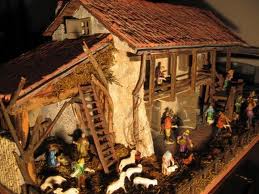
Living nativity scenes are pretty famous in Italy and they are called presepi viventi: they are made of costumed people acting out the parts of the nativity. For example, Chia, near Soriano, shows a large living nativity on December 26 with more than 500 participants!
Often living nativity scenes stay on for several days, usually Christmas Day and December 26, and sometimes around January 6, when the three Wise Men gave Jesus their gifts. Let’s go around Italy and discover a bunch of towns that reenact the Nativity scene!
Milan has an Epiphany Parade of the Three Kings from the Duomo to the church of Sant’Eustorgio on January 6.
Barga is a beautiful medieval town in northern Tuscany with a living nativity and Christmas pagaent on December 23.Equi Terme, in the Lunigiana region of Tuscany, has a reenactment of the nativity that takes place throughout the village.
In Liguria the living nativity scenes can be seen in the towns of Calizzano, Roccavignale, and Diano Arentino during the period of December.
Vetralla, in the northern Lazio region, has the oldest living nativity in the region.
In the South of Italy? Custonaci, a small town near Trapani, in Sicily, has a beautiful nativity scene re-enacted inside a cave. Rivisondoli, in the Abruzzo region has a reenactment for the arrival of the 3 Kings on January 5 with hundreds of participants. Rivisondoli also presents a living nativity December 24 and 25. L’Aquila and Scanno also in the Abruzzo region have living nativities on Christmas Day.