Panettone recipe: how to make a taste of Heaven

Never made a panettone? Work the dough, if possible, with a dough mixer also because beating times with a mixer are about 20 minutes, where hand-beating will require about 50.
The room? It must be warm, about 72 degrees F (22 C).

The flour? It should be about 68 F (20 C) and a very fine all-purpose flour, extremely dry.

The water? Again it should be warm, about 76 F (24 C).
Add also a pinch of salt, because this trick stimulates the rising.
Bakeries use a sour dough starter (like the wild yeast). Home recipes generally uses baker’s yeast, too.

The baking time? It will depend on the size of our panettone. An oven temperature of 400 F (200 C) will be fine for  half an hour of baking. This is ok for a small to medium-sized panettone: larger ones will require more time. Better to try a small-medium sized one, then, at home.
A little trick: slip a bowl of water into the oven when the panettone is half-baked to raise the humidity so the surface of the cake will be shining!
For a tall panettone, put a ring of heavily buttered thick paper around the dough then put it in the oven.  We have also a double rising to wait for!

For the first rising you will need5 ounces (140 g) fresh yeast cake, 3 1/3 cups (400 g) flour, 3/8 cup (90 g) unsalted butter, 5/8 cup (110 g) sugar, 6 yolks, 1/2 teaspoon salt, 4/5 cup (200 ml) tepid water
For the second rising, you will add 2 1/3 cups (280 g) flour, 5/8 cup (110 g) unsalted butter, 7/8 pound (400 g) sultana raisins,  1/2 cup (100 g) sugar, 1 1/2 teaspoons vanilla extract, 1 teaspoon honey, 1/2 teaspoon salt and 6 yolks.

You have to start the afternoon before you actually bake the panettone. Cut the butter and melt it over a very low flame or a double boiler. Put the sugar in about 2/5 cup of warm water. Put the melted butter, salt, and yeast cake in a mixing bowl  and mix well.

Add the yolks and sugar and put in the flour. Mix for 25 minutes and put the dough in a lightly floured bowl. Cover it with a heavy cloth, and keep it warm.

After the raising, take the dough and work with the flour, vanilla, yolks and honey. Mix for about a half hour, put 2 tablespoons of the butter, melted as before, and a little water. Add the fruit, mix and round the balls of dough.

Let them rise in a warm place for a half hour. Put the panettone in panettone molds and put them in a warm spot to rise for 6 hours.

Put the panettone in the oven and Merry Christmas!


Christmas Markets in the Southern and Central Italy

We already talked about Christmas markets in North of Italy, but now it is the right time to check also the ones located in the central and southern Italy! Lot of  fairs are waiting for you with their wooden booths full of arts and crafts, regional specialties and Christmas decorations. The items are as diverse as beautiful but nit is the atmosphere that you are probably looking for! Lights and shouting, Father Christmas and sheperds, living nativity scene and presepi are all close to the markets, usually.

Let’s start with our Christmas markets second episode to give you a full and round picture of what is the offer in Italy for Christmas time!

Umbria is, for example, a yummy place for buying some goodies and presents. Many towns in Umbria are known for a particular craft or product: Deruta and its famous majolica, Montefalco’s jacquard, the foodie mecca of Norcia. And you can find the work of artisans in the Mercatini di Natale, which stands for Christmas markets, and they are ful of Italian and regional specialities and artisan workshops. Perugia’s Rocca Paolina is the location for this kind of Christmas event and Spoleto hosts them in Palazzo Leti Sansi.

In Rome Piazza Navona hosts a very big Christmas market. There is a life-size nativity scene set up in the piazza. Going South, you have to visit Naples and its  December Christmas market near Via San Gregorio Armeno, which is pretty famous for its many nativity workshops. Some vendors are all dressed up in a traditional shepherd costume!!! You can also visit Sorrento located on the beautiful Amalfi peninsula in the Bay of Naples: in the main square the Christmas market through January 6. Siracusa in Sicily holds a two-week Christmas Fair.

Also in Cagliari located in lovely Sardinia you can find a Christmas Fair that stays on for two weeks in December: you can buy a lot of traditional crafts, food, and wine over there.

“Presepi” of Italy: a Christmas tradition

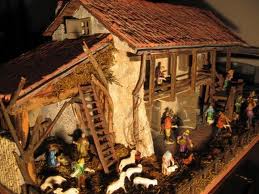
Jingle bells, jingle bells…here comes the time for Christmas decorations in Italy!!! The most important tradition is connected to the Nativity scene, called presepe or presepio in Italian language.

Every church and every family has its own presepe. You can find it in the middle of the squares, outside the shops, and in many public areas. The manger scene is a must but you can expect much more: the representation collect often the entire village!

When do Italians make a Presepe (Christmas crib)? They set up it  starting December 8, that is the Feast Day of the Immaculate Conception, and you put back in the storage room on January 6, that is the Epiphany.

Figurines for nativity scenes are made in many parts of Italy, but the  best are certainly coming from Naples and Sicily. Baby Jesus is added on Christmas Eve.

The Nativity scene representation has a long history: it is said to have origins with St. Francis of Assisi in 1223, when he builded a nativity scene in a cave close to the town of Greccio, which reenacts this event each year. There it has been held the first Christmas Eve mass and a nativity pageant.

Carving figurines for nativity scenes started in the late 13th century: thanks to Arnolfo di Cambio who had to carve marble nativity figures for the first Rome Jubilee held in 1300. The original nativity can be seen in the museum of Santa Maria Maggiore Church. Many are the museum dedicated to the “presepe”.

Il Museo Nazionale di San Martino is in Naples and boast a fab and very elaborate collection of nativity scenes starting from the 1800s. Il Museo Tipologico Nazionale del Presepio is under the church of Saints Quirico e Giulitta in Rome, and exhibits over 3000 figurines from all over the world! The museum has very limited opening hours: closed in the summer but open each afternoon December 24-January 6.


Top Italian Christmas Markets in the North: let’s go and discover it

The lovely Christmas Markets in Italy are good and big as well as in the cities and in villages throughout Italy. The market sells everything: toys, candy, Christmas items, handicrafts, ect. This is a funny way to taste also regional food, drink, and music!

Christmas markets are the Mercatini di Natale: let’s go and grab some funny and useful stuff! For example, if you are in Trentino-Alto Adige Region in the north of Italy you will find one of the best examples for Christmas markets. Many mountain towns display Christmas markets and you can find on sell everything: from really tacky items up to local handicrafts.

Trento holds one of the best Christmas markets: it starts at the end of November and offers more than 60 traditional wooden huts located in Trento’s city centre. While there don’t forget to see the large Nativity Scene in Piazza Duomo!!!

Venice turn Campo Santo Stefano  into a Christmas village in December:  wooden houses  in the piazza and stalls are all over, with a lot of high quality Venetian handicrafts.

Trieste holds its market called Fiera di San Nicolo the first week of December, while in Verona you will find a huge Christmas Market with over 300 stalls and tables. When?  The second weekend of December through December 13, that is Santa Lucia Day.

Turin holds a Christmas market during December in the Borgo Dora area, with a different kind of items: open all week and on the weekends, you will see also a big Christmas tree and a nativity scene, too. Not too far from Turin, Milan has also a Christams market in the historic center from early December through January 6, as well Bologna starting from late November through early January.

Genoa differs because, besides a Christmas market, holds also a winter fair with an exhibition of arts and handicraft products for sale.

In Florence, the children can visit the house of Babbo Natale (Father Christmas)! Of course you’ll find a Christmas market  during Florence Noel: this event starts at the end of November.   Siena holds a variety of Christmas markets during December and Lucca holds a Christmas market in Piazza San Michele throughout December 26.


Frico: a gorgeous recipe from Udine

Frico is a fantastic recipe made from cheese and potatoes. In the North West corner of Italy, Frico is a typical dish originated from the Friuli Venezia Giulia region of Italy.  In some parts of the region people like to add onions, some others like to put an egg  into the mix. In the end adjusts the frico recipe, often to follow their family tradition.

The two fundamental ingredients for the frico recipe? Potatoes and cheese.The egg is required to increase the volume of the dish!  Sometimes instead of boiling the potatoes, some people just grate the uncooked potatoes and carry on making the frico, like the Swiss potato rösti.  For the frico recipe the cheese is really important; just use the type of cheese they made in Friuli region: Montasio cheese.

So Boil the potatoes, smashed with a fork and add half of the amount of  fresh Montasio (about 2 months old) and half of a semi-aged Montasio (about 5 months old), otherwise use what you can get. A fresh cow’s milk cheese will be also good. You may find this type of cheese in an Italian deli shop or from a continental cheese importer.

Try not to go cheap on the cheese! And please, if it is impossible for you to get a lovely Montasio, whatever age you can find it, then look for Asiago cheese. It is really good indeed and  it will work as good as the Montasio’s one!

If you are not kissed by the luck’s fairy, no panic at all! Just look for some good mild cow’s milk cheese. You can eat with rye bread (or German type bread) and a glass of red wine (Montepulciano).


New Year’s Eve in Italy: traditional festivals and parties

Italians are fond of many things: food like pasta, pizza, wine and… festivals! The Capodanno that is the New Year’s Eve in Italy is a fab period to celebrate in Italy. Known also as “La Festa di San Silvestro”, it is celebrated the 31st of December on New Year’s Eve.

Food is the main character in this “play”. Families and friends get together for eating a lot! Traditionally, the dinner will have a cotechino to eat (that is a large spiced sausage), or a zampone (that is a stuffed pig’s trotter). The pork meat stands for the richness and future eventual prosperity in the coming months.

Lentils are also always on the table, as a symbol of money and a sign of good luck for the coming year.

Spumante or prosecco, Italian sparkling wine, is a must as well.

Huge midnight fireworks displays will welcome the coming of the new year. You can join the official shows in the central square or the private parties with firecrackers or sparklers. Naples is well-known for the best and the biggest New Year’s fireworks shows in Italy.

Dancing and music is also a must in the last years: many towns have “il concerto di mezzanotte” meaning music and dancing before the fireworks. Rome, Milan, Bologna, Rimini, Palermo and Naples but also nsome other towns nowadays create magical events with pop and rock bands performing for free outdoor. New Years parties will often last until sunrise to say hello to the new year.

Guests in the parties play a game called”Tombola”, a sort of Bingo, but even funnier: each number has a nickname or a story attached!

In the south of Italy, people will be throwing old things out the window, in order to underline that they are ready to get rid of their old sorrow and attachment and accept a brand New Year.

Another habit is to wear a new thing and a red underwear: do it and this will bring you luck in the coming year!

Home made bread: yummy recipe

Make bread at home this winter! the “Pane fatto in casa”‘s recipe will explain how to make your own Italian country bread at home! In Italy there are lots of varieties of bread: the art of making this delicious food also gives a lot of different names to the results.

It depends on the region of Italy the recipe comes from. let`s try to make Altamura type of bread. it comes from Puglia, a region located in the South of Italy

Ingredients are: 500 g (1.1 lb) Durum wheat semolina, 10 g (a bit less than ½ oz) Fresh yeast, 10 g (1 tbs) Salt, 300 ml (½ pint) Warm water (1 part hot and 2 parts cold), 7.5 ml (½ tbs), ½ tsp of sugar

Ready for the directions?

Put 150 ml of warm water into a jug. Break the fresh yeast (you can buy from Jewish shops a really good one) into pieces and put it into a jug as well. Add the sugar and stir until the yeast is completely dissolved. Cover the jug with a towel and leave to rest (ca. 10 minutes). Put the semolina flour into the big bowl, add the salt and stir. After 10 minutes, whisk  a bit. Work the dough and Put the remaining 150 ml of warm water into the jug. Add the semolina flour into the bucket. On the top of the flour add the remaining 150 ml of warm water.

Knead the dough and when it is ready, sprinkle some plain flour in the bottom of the bowl. Put  the dough into the bowl and cover. Rise the dough inside the oven (you preheat it and leave it on off mode, then put the dough) to rise for 2 hours.

Now put the dough on a working surface, work it with your hands and make a rectangular layer (20×30 cm and 2-3 cm thick). Put on the tray, sprinkle some flour or olive oil and it is done!


Umbria Gospel Festival: a winter of joy

From 2011 December 8th to 2012 January 1st it is time to joy: Umbria Gospel Festival is waiting for you!

Christmas time in Umbria and the Gospel: Afro-American sounds get alive in the Umbria Gospel Festival, a fantastic music event together with great artists and great locations. The best Gospel choirs will be touring the characteristic towns of the Umbria region announcing the Nativity with their emotional voices. The premiere is on December 8th at the church in Paciano (Quiet Place – Soul of Gospel Revue). Then from December 23rd to January 1st the festival will be at the theatres and churches in Spoleto, Città della Pieve, Gubbio, Città di Castello, Panicale, Perugia, Castiglione del Lago.

The “Chiostro di San Nicolò” in Spoleto will host the amazing New York Spirit of Gospel choir on December 23rd; the “Chiesa di San Pietro” in Gubbio on December 27th you can see the performance of The Antony Morgan’s Inspirational Choir of Harlem and the great choir Katie Taylor & Favor at the “Teatro degli Illuminati” in Città di Castello.

The concert by F.O.C.U.S. Sound of Victory is at “Teatro degli Avvaloranti” in Città della Pieve on December 26th, and the concert by Boyle Harmony Singers will be at “Teatro Caporali” in Panicale on December 29th. A special event on December 30th at Auditorium Vannucci of the Hotel “Quattrotorri” (Ellera, Perugia):  South Carolina Mass Choir will be there.

The new year’s party will take place on December 31st  at Auditorium Urbani in Passignano sul Trasimeno: it will host The Funk & Soul Night Explosion, an amazing music event! You will be dancing all night with the best Funk, Soul and R’n’B music with excellent musicians on the stage and two groovy concerts (James Thompson and Sherrita Duran will be on stage). Festival ends on January 1st 2012: the new year’s Gospel concert will take place in the afternoonat “Chiesa di Santa Maria Assunta” in Castiglione del Lago with Flossie Boyd Johnson & Favor.


Seafood pizza: when the Earth meets the water

The  seafood pizza: when Earth meets water! A fab opportunity to put together ingredients coming from different “worlds”: the flour coming from mother Earth and from its tasty fruits, and the fish, coming from the sea and the ocean , so healthy for the persons and so tasty for you! It is difficult to resit to the enchanting call of this syren! So come on board to read one of the good and different golden crispy pizza full of love and fish!

If you have already made the pizza dough, for the topping you need to use 1 Monkfish tail, Tiger prawns
Green olives (stoned), Caper berries, Tomato passata di pomodoro. You can add also some fresh basil leaves and coarse semolina flour  for the pizza peel.

When making pizza,always avoid topping the pizza with fresh tomatoes! The  waterly juice content inside them will make the pizza base soggy. Dry the tomato first and put it on in the oven. Set the oven at its lowest (around 100C) and in a couple of hours it is going to be done. The tomatoes should  retain a slight juiciness. Pre-heat the oven, cut the monkfish tail into pretty small pieces, put some coarse semolina flour onto the pizza peel.

Move the pizza base on the peel, quickly sprinkle the tomato sauce and top the pizza base with the ingredients you have chosen.

A final splash with olive oil all over the pizza will help to cook a bit everything in a soft way.

Nowall in the oven and bake it for 5-7 minutes until the base looks crispy and golden!!!

Carnival in Italy: amazing moments

Carnevale is one of the most interesting and funnny feast in Ital! It is also called Carnival or mardi gras and it has always been celebrated in Italy and in many places around the world exactly 40 days before Easter.

Carnevale in Italy is a huge winter festival full of parades, music, masquerade balls and parties. Children and adults throw coriandoli at each other. A Carnevale ogni scherzo vale, anything goes at carnival and so pranks are famous during Carnevale.

Carnevale developed from pagan roots and it has been adapted to fit into the Catholic church. Carnival is actually one date, but in Venice and some other places in Italy the celebrations and parties take off a couple weeks before!! The Maschere are the most important part of the carnevale: Venice is the best place to show and see traditional carnival masks and people also dress up with the help of fantastic costumes for the festival.

Viareggio is another place really funny to be in this periods! The most famous and elaborate “carri” are born and developed here, inside the artisan’s laboratories, which work all year round to get to this particular day and show off their incredible creations: the “carri” present parody of the main politician events, with cartapesta characters. Guess who is the most represented Italian politician this year? Ok, let’s help you a bit…it start with “b” the name. But Mr. B. is not the only one of course: the masquerade parade involves a lot of characters and topics all to taste and experience goign to Viareggio in this period.

What may you eat during Carnevale? Each region and even each city and town  has its own tradition, but fairly common is the chiacchiera, a kind of really fragile and tasty pastry based dessert!!


The 2011 date for Carnevale? It is March 8th but many celebrations in Venice and many parts of Italy startalready  in February.