Amalfi: romance and history in the south

Amalfi CC BY-SA 2.0, Joe Ross

Romantic beaches, beautiful landscapes and luxury resorts all surround the Amalfi Coast. This is one of the most prestigious and glam experience you can have in Italy. Visitors from all over the world are coming over for the journey in the Amalfi Coast and they are rewarded with fantastic views and incredible experiences. A trip among relics, cliffs overlooking the sea, clear water and hot weather is a  dream, especially if comes along with delicious food and fantastic ingredients. The Naples’are cousine is an experience you can’t miss  once you get here.Let’s go offshore and meet with the fabled island of Capri, first, then we will get back to the coast and explore its secrets and its touristical atractions.

The island of Capri is famous as an important movie location: stars like Sofia Loren but also writers as Ernest Hemingway! Capri is in fact a Mediterranean fabled island of calcareous origin.  Intellectuals, artists and writers visited Capri over the centuries, all enchanted by its magical beauty.

Capri is easily reached by ferry from Sorrento and you will find shops, beaches and international tourists surrounding you as you explore the island. Wild nature, culture and events in such a mild climate invite you to come here and visit in particular the beauty of the Blue Grotto. A number of steps are descending into the valley below and here comes the Matermania Grotto, an impressive natural cavern changed during Roman times into a luxurious Nymphaeum. After the raising of the island during the paleolithic period, the “grotto” was liberated from the erosive action of the waves and the wind.
Beyond the Grotto, an easy path along the cliff bordering the sea brings to Villa Malaparte, built at Punta Massullo. Tragara Belvedere is the starting point of another breath-taking tour, and after that you can reach  the centre in a few minutes. Memories of the Greek colianism survive in the place.
One of the most popular of the cities along the Amalfi Coast, Sorrento is an incredible collection of brightly coloured houses along the cliffs, kissed by the sun. Sorrento is an excellent start for visiting the rest of the coast including other major cities.

Famous also in Greek times, the legend tells us that the sirens lived  in Sorrento’s waters. Sailors couldn’t resist the beautiful song of these charming half-women/half-fish monsters. The truth is that Sorrento looks directly over the Bay of Naples to Mt. Vesuvius, and could be the starting point to reach the west, where you can find the best of the peninsula’s virgin countryside and, beyond that, the famous Amalfi Coast; to the north Pompeii and the archaeological sites will be worth a trip.


Amalfi was in the past one of the most powerful cities and marine republic in Italy. Today it is a beautiful stop along the coast. A seaside stroll with lunch or dinner is perfect and it is also less crowded than Sorrento.

Praiano is another town lying in the sun and on the cliffs with a lot of history and more affordable prices. Ancient interesting relics like the ones of Saint Luke you can find in Chiesa di San Luca Evangelista. Once just a remote village of fishermen, Praiano now it is a popular resort with a stunning clear water  and a fantastic views from hotels and belvedere. The town is built into the walls of a cliff along a steep declice, but wandering streets and staircases make it easy to visit the town and access the restaurants as well as the galleries.

With your family or just as a great vacation, especially in June when the climate is good but not too hot and the beaches are not that crowded, Amalfi Coast is waiting for you from all over the world.

Masquerade in Italy: Venice Carnival rules

Carnival of Venice CC BY-NC-ND 2.0, Nemodus photos

Walking around inside the Venice Carnevale is an unmissable experience. Italy’s top carnival or mardi gras celebration was on the beginning of February, but the  Carnevale season lasts several weeks. Costumed characters and food stalls all around, fun and many music event culmintaing with incredible ball. This is a trip to be planned ahead and to book well in advance. Venice is glamourous during Carnevale season.
Carnevale in Venice made the city mad and packed. Awesome public entertainment all over through early evening till late.

Masks everwhere are hanging out giving you a kiss, an hug, a bow! If you were there, just going for a stroll out of your hotel and walking around through the bridges and the calle is mesmerising. For the best Carnevale experience, you need absolutely to rent and wear a costume or a mask.
 

Where to find the main events?

You need to hang around Piazza San Marco, but many others events are there to be discovered in every single “Sestiere” (Venetian quarters) so let’s have a walk and an icecream going around to visit other areas of the town. You will end it up among the fireworks show again in Piazza San Marco. Venice is a fish, a famous book on Venice states, and during Carnevale it is a dressed-up fish!!!
You need to experience also a masked ball in Venice where you can ren out  a beautiful costume and join for about 500-600 euro. Is it tto much? Not at all for a night like that in amazing Venice! More masquerade balls will be held also inside.
Staying in Venice from the Wednesday through the Saturday prior to Carnevale is advisable, too. Loads of activities are planned in Venice before the actual Carnevale date and there will be also costumed characters.
Carnevale dates moved to and forth the calendar every year, corresponding with Shrove Tuesday, meaning forty days before Easter.
Carnevale weather may be cold or rainy, but hopefully you can be lucky enough and get sun even if with chilly air.

The meaning of this masked extraordinary madness has due to be consumed in 12 days, celebrating the coming of spring for your refined, intelligent senses.

Carnevale in the history

Venetians started from the 15th century to give birth to this tradition. The masked balls started from this period and you could find cruelty sport such as bull-baiting and firing living dogs from cannons! In the 18th century Venice was decadent and  the licentious  Carnevale lasted …two months!!!

But when Napoleon in 1797 conquered the town, carnevale was reshaped and reduced. Mussolini gave the last blow: fascists banned the wearing of masks, the basic of Carnevale. The revival came in 1979, becoming again the world’s Carnevale festivals.

“A Carnevale ogni scherzo vale” (everything is allowed on carnival season)

The celebration begin always on the Friday afternoon with La Festa delle Marie: it is a long procession which get through the city. The official opening hits on Saturday around 4pm, when a masked procession goes from Piazza San Marco through the streets.

The next day? A magnificent jousts and many tournaments are planned to shake the calle. The following Friday evening you will join the Gran Ballo delle Maschere (Grand Masked Ball), or Doge’s Ball, which takes place in different locations each year , a suitably grand palace. Anyone dressing a costume and mask would be able to dance the quadrilles and other traditional dances.

Saturday and Sunday are hosting musical and theatrical performances in Piazza San Marco and other locations. Do not miss out a match at Calcio storico (a medieval football in costume) in Piazza San Marco!!! Here you can see the fab parade of the best and most ornate costumes, which will be repeated on Tuesday, too. On the Sunday, a procession of decorated boats and gondolas carrying masked passengers will make your day looking down the Grand Canal.


Capodanno in Italy: where to go

CC BY-NC-ND 2.0, renagrisa

Where to go for New Year’s Eve in Italy? Let’s start quickly our journey splitting up into two articles the huge amount of infos that revolve around this big event.

Italians love to celebrate the ending of the old year and the beginning of the new year, meaning il Capodanno, a great time to be in Italy. La Festa di San Silvestro is on December 31, New Year’s Eve. Food plays an important role. Families and friends gather together for a huge meal. Lentils are the main character in this important play, bringing to whoever eats them money and good fortune for the coming year. The dinner includes a cotechino, that is a large spiced sausage, or a zampone, stuffed pig’s trotter, symbolising the richness of life for the coming year. Don’t forget to wear your red underwear to jump into the new year! It’ll bring you much luck in the coming year.

Huge midnight fireworks displays welcome the coming of the new year. Most towns have public performances of pyrotechnic fire in a central square and private parties will include firecrackers or sparklers, too. Naples has for sure one of the best and loudest New Year’s fireworks displays in Italy. Many towns like Bologna build a bonfire in the central square where to meet friends into the early morning. Dancing and music before the fireworks are popular in the different piazzas: Rome, Milan, Bologna, Palermo and Naples put on huge outdoor shows with pop and rock bands.

The New Year is also celebrated with rivers of spumante and prosecco, the most lovely Italian sparkling wine. New Years’ parties last until sunrise and are full of joy and craziness.

An old habit, especially in the south, is that of throwing old things out the window around midnight! So please do not walk around or watch out of flying objects falling from the houses and balcony! Why Italians do this? To show to the world and to yourself that you are ready to accept the New Year.


In the North:

St Mark’s Square has an important celebration with music, an enormous fireworks display, bellini “brindisi”,a huge group kiss at midnight, which is also held in Piazza Ferretto, in Mestre. Many restaurants in Venice held a huge feasts on New Year’s Eve. Really expensive, with many courses and lots of wine, you need to make a reservation ahead of time. On New Year’s Day, Venice go crazy and many take a chilling turf in the waters of Venice’s Lido Beach. New Year’s Concert? Yes, grazie. The Concerto di Capodanno will be at La Fenice Theatre performed on December 30, December 31, and January 1. The December 31 performance (4pm), is followed by a huge New Year’s party starting at 8pm. A Venice Golden Opera New Year’s Eve concert are also held at the Scuola Grande dei Carmini at 7:30pm.

Also Rimini holds a huge New Year’s Eve festival in Piazzale Fellini starting at 9:00pm and  Bologna celebrates New Year’s Eve with the Fiera del Bue Grasso (“fat ox fair”). The ox is decorated from horns to tail with flowers and ribbons. Reminding an old pagan cult, but today completely christianized, the church bells rings, spectators lit up candles and fireworks are set off. A special lottery is held and the winner gets the ox. The holy procession on the other hand are on the way and it ends just before midnight in Piazza San Petronio, while in Piazza Maggiore there’s live music, performances, and a street market. At midnight a puppet resembling an old man is thrown into a bonfire.

In Florence fireworks will be set off at midnight and you can see it from one of the bridges on the river Arno.

Then one last thing to say: Buon anno!!!!

New Year’s Eve in Rome and the pagan rituals of transition

CC BY-NC 2.0, Eric Parker

Why Christmas probably originated in Italy? The christianization of Saturnalia and other pagan festivals in the third and fourth centuries is the most probable answer. What happened? The church in Rome was in competition with the spread, popular pagan mystery cults involving sun worship and the winter solstice.

So Emperor Aurelian stated that December 25, that is the solstice on the Julian calendar, should have been “natalis solis invicti” (that is “birth of the invincible sun”), a festival which honoured the Sun god, Mithras.This is the reason why the Nativity feast is put on the same date, meaning to fight against this cult directly. Jesus was described ad the “Sun of Righteousness” and in this way replaced Mithras cult.

Over the centuries, the Christmas holiday strenghten in importance and  was  celebrated with many and varied events, putting together the Christmas tree and the Nativity cribs.

In modern Italy, the celebration of Christmas has its own unique dishes and recipes that accompany both Nativity Day’s Eve and New Year’s Eve.

And in Rome? The traditional New Year’s Eve are in Piazza del Popolo, where a huge crowd gather and celebrate with music, dancing and fireworks. On New Year’s day the party is on for the children, which  are entertained in the squares by performers, actors and acrobats.

Where to go in Rome to taste the crazy parties? Another place to let yourself free and celebrate will be  for sure near the Colosseum. In Via dei Fori Imperiali there’s a plenty of people and live music, usually starting around 10pm . Of course you can admire also fab midnight fireworks. If you feel more traditional, you can go next to the church of Santa Maria del Popolo, and see the exhibit of traditional nativity scenes coming from 100 regions of Italy plus other countries.

Rome helds also a classical music concert outdoors on the square in front of the Quirinale (Via Nazionale), around 11pm.

Skiing in Italy: opportunities and famous areas

CC BY 2.0, Matt Squirrell

If you are in Italy on vacation in Italy in winter time, you need to go skiing! Actually in all Italian mountains you hav got an opportunityto live the snow fully and to do your favourite winter sports: for amateurs, for beginners, and for professionals, Italy is waiting for you on holyday with its great gastronomic traditions.

For example, the Piemonte (Piedmont) Region has amazing skiing resorts and mountain sports. 53 ski resorts and 1300 km of runs in the villages in 2006 has hosted the winter Olympics!!!

Near the Swiss border you have to go and have a look to the village of Cervinia, pretty famous for being an hub for celebrities and VIP, at the base of the Monte Cervino. Less expensive of the close-by Zermatt, Cervinia has a casino, restaurants, swimming pool, ice skating, movie theatre, a run over 20km long, one of the longest in the world. Skiing is best here for intermediate skiers.

The  Dolomites, bordering Austria, are a great locations because of the spectacular mountain sightseeing and the Italian skiing villages. The Dolomites are good for beginning to advanced skiiers and offer other winter sports as well with Ortisei, Cortina d’Ampezzo and Val Gardena, world famous ski areas. In particular the ski area of Val Gardena is highest in the Dolomites and has already hosted the World Cup skiing in the past. Val Gardena is included in the big Sella Ronda circuit with 80 lifts and a ski range of 1563-2518 meters.

Plenty of snow and activities also in the resort village of Selva Gardena, at 1563 meters with  a large number of restaurants, ice skating, and indoor sports events.

Skiing in the South? Of course. Italy’s Abruzzo region is just a few hours from Rome, with its 21 ski areas and 368 km of runs in the highest part of the Apennines. This area sometimes in winter boasts more snow than the Alps. The most developed ski resorts are in Roccaraso, but beautiful is the Gran Sasso, which is the highest point in Italy! Good skiing here including cross country skiing speciality. And going even more south, you need to visit Mt. Etna, Sicily’s best-known volcano and for sure the highest point in Sicily with its 3350 meters offers plenty of activities in winter season. Lot of snow, 1400 meters of vertical skiing. Two ski areas on Etna, too: the southern slope is called Rifugio Sapienza and the northern the resort of Linguaglossa.


Christmas in Rome: festivity lights and Colosseo for you

CC BY-NC-ND 2.0, Emma Gawen


Rome is one of the top Italian tourist place to visit during the Christmas holidays. The celebration of Christmas actually originated from here. Why? It is recorded that the first Christmas mass was hold at the Church of Santa Maria Maggiore. For the Rome Jubilee in 1300 it was created a permanent nativity, the first ever known.

So we are here and where is the party? The magnificent Christmas sights during the Christmas  season starts from early December and goes through Epiphany, meaning on January 6. Rome’s main streets are decorated with shining lights: underneath musicians entertain the visitors passing by and vendors sell  exquisite roasted chestnuts. For a Christmas shopping it is better to venture in the little streets close Piazza di Spagna. Close to Castel Sant’Angelo instead you can find an outdoor ice skating rink, open daily from 10:00 to midnight, and close there is also a small Christmas market.
Each year you can visit the huge Christmas tree in Saint Peter’s Square: for the life-size nativity you need to wait until Christmas Eve.Also in Saint Peter’s Square an emotional moment is the midnight mass on Christmas Eve inside Saint Peter’s Basilica and when the Pope greets the audience with his Christmas message at noon on Christmas Day from the window of Palazzi Vaticani.

In December Rome’s incredible Baroque Piazza Navona  sees the presence of a huge Christmas market. You will find stalls selling all kinds of seasonal sweets, toys, but also thi is the right time to buy nativity figures, Christmas decorations, and of course thousands of gifts. There’s a merry-go-round and  Father Christmas, makes his funny appearance to amuse the kids…and the grown-ups. A large nativity scene finds its place in the square later in December.
Fantastic are the nativity scenes in the main churches: in Santa Maria Maggiore there is the oldest “presepe“, a  permanent nativity scene which was carved in marble by Arnolfo di Cambio in the late 13th century, on display in the museum of Santa Maria Maggiore. Here again, below the altar, you can find a reliquary which is said to contain pieces of the original manger!!!

The Church of Saints Cosma and Damiano displays one of the largest nativity scenes. commissioned by Charles II of Naples to six master woodcarvers, who worked on the scene from 1780 through 1820.  This is the presepe that started the Naples style nativity!

Rome celebrates also with the large Jewish population it presents. Hanukkah is an important holiday celebrated in December for the Jewish world. A large Menorrah is present in Piazza Barberini: one candle is lit up each night during the Hanukkah period.

Italian Christmas Markets in the North: a taste of festivity

CC BY 2.0, darvina06

Christmas Markets (“Mercatino di Natale”)
in Italy are a special tradition  that is at heart of the winter festivities in many “piazzas” around the “Belpaese”. From big cities to small villages, the fever of the Christmas markets run through Italy for a couple of days or an entire month or even  longer: some markets finish on the 6th of January (“Befana”).

Christmas Markets in Italy are less numerous than the markets in Germany, but they are popular both with the locals and visitors from Europe and the UK.

The Italians create every year also elaborate crib displays and nativity scenes close or as a centre for many Italian Christmas Markets. The Italian stallholders offer fantastic local food and drink plus locally manufactured seasonal gift products.

Let’s have a round starting from the top Italian Christmas Markets in Northern Italy: for example let’s go in Trentino-Alto Adige Region: snow, mountains, great food and great Christmas markets, thanks to its influence coming from the close Germany. Many mountain towns hold Christmas markets: here you can find many lovely but pretty tacky items. But also some interesting wooden carved local handicrafts can be found here. Lights and sweeties complete the fun.

Trento holds one of the best Christmas markets in Piazza Fiera, from the end of November up to the end of December. The market shows off more than sixty traditional wooden huts which sell crafts, decorations, and food . A large Nativity Scene is created in Piazza Duomo, too. Bolzano holds a daily Christmas market from the end of November through December 23 in the historic center.

Veneto has its share of markets on display as well: if you go to Campo Santo Stefano in Venice you will be surronded by the wooden houses in the piazza with the stalls selling high quality Venetian handicrafts. Verona in Piazza dei Signori has a huge German-style Christmas Market with wooden stalls from in late November through December 21.


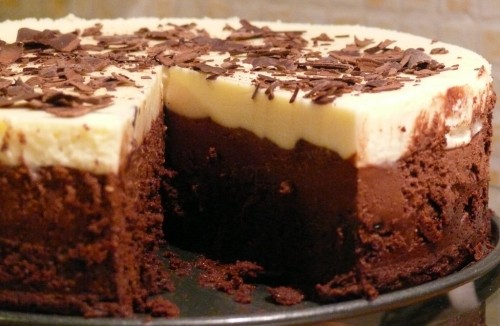
The Chocolate Mousse: the tasty calling for Christmas

To help you celebrate Christmas but all Italian style, today we go deeper and deeper in the Italian Christmas tradition and we discovered this tremendous recipe, perusing the web. This triple joyful Chocolate Mousse will bring fun and calories to all of you as all the other spoon desserts that we have already presented to you. We will need the following ingredients:

INGREDIENTS

for the white Chocolate Mousse

  • 1 lb double cream
  • 11 oz white chocolate
  • ½ oz gelatin sheet

for the milk Chocolate Mousse

  • 1 lb Double cream
  • ½ lb milk chocolate
  • ½ oz gelatin sheet

for the dark Chocolate Mousse

  • 1 ½ lb double cream
  • 1 lb dark chocolate
  • ½ oz gelatin sheet

To garnish remember to have close 10 oz. of dark chocolate to spread over

PREPARATION

for the White Chocolate Mousse:

  • Soften the gelatin sheets in the hot water for a minute or two.
  • Melt the chocolate in a bain marie and after add the gelatin to the chocolate. In the meanwhile, bring ¾ cup of cream to a boil, then  remove it quickly from the stoves.
  • Stir in the chocolate together with the gelatin mixture, which you have kept at a temperature.
  • With a whisk, beat the remaining ¾ cup cream. Cool the chocolate mixture, then add the whipped cream. If the chocolate is still too hot, wait, otherwise the whipped cream will melt.
  • Put the mouse in a mold and let cool in the refrigerator for an hour and a half.

For the Milk Chocolate Mousse follow the same procedure.When finished, pour the second mousse into the mold containing the previous mousse. Put all into the fridge for and hour and a half and let the second mousse set.

Prepare the third mousse, meaning the Dark Chocolate Mousse, in the same way and at the very end pour the dark chocolate mousse into the mold containing the other two mousses. Return to the fridge and let everything set for three hours. Before serving, melt ¾ cups of dark chocolate in a bain marie and pour it over the mousse layers.

Christmas in Italian towns between snow and markets

CC BY 2.0, darvina06

Again as every Christmas, we should pay attention to the various christmas market spread throughout Italy.

Let’s start with Trieste, in north east of Italy, exactly in Friuli-Venezia Giulia region. The town is an architectural mixing up of different architectures: here Muslims, Slavic and German heritage mix together into an exciting sightseeing. La Fiera di San Nicolo is one of the most important feast held in the region. In the first week of December, the market will sell toys, candy, and Christmas products. If you are in friuli do not forget to go to Pordenone, which holds a market from the first of December up to the 24th.

Milan offers a Wonderland Village in the historic centre from early December on through January 6: a market, ice-skating rink, and entertainment. “Oh Bej, Oh Bej” is a big market with several hundred stalls held near Castello Sforzesco on December 7.

Bologna  hold a Mercatino di Natale starting late November on and Torino during December in the Borgo Dora area. Also Genoa holds a week-long Christmas and winter fair in December: exhibitions of arts and handicraft products here are for sale.

Going Central we will find the famous Rome‘s Piazza Navona with a big Christmas Market. Father Christmas will be there for picture taking opportunities! A life-size nativity scene set up in the piazza later in the month.

In Florence everything starts at the end of November. Go and visit the house of Father Christmas, after  a Christmas market round in Piazza Santa Croce, which is a popular German-style Christmas market with many booths from the end of November through mid-December.

Lucca holds a Christmas market in Piazza San Michele, usually through December 26. Siena, in Tuscany, holds several Christmas markets during December.

Perugia, in Umbria, has its own big Christmas market for three weeks in December  in Rocca Paolina.


Italian castles and attraction for winter time

Castello Estense CC BY-NC-ND 2.0, Carlo

We love Italian castles as you already know; let’s go further with our seasonal trip discovering the beautiful architecture of this masterpiece (sometimes they are also UNESCO sites).

Today we go to Northen Italy and we will stop first to Soave. . This is a small wine town is enclosed by its medieval walls and topped by a castle. The town is in Veneto region, near Verona “the city of the lovers”. The scenario is breath-taking: the manor is surrounded by vineyards producing the famous Soave wine.
We can continue and land in Emilia Romagna, visiting Ferrara on the Po Delta. The walled Renaissance city brings about a lots of great examples of Romanesque and Gothic architecture. Its astonishing medieval castle, Castello Estense di Ferrara, is in the old town. Torrechiara Castle are instead located near Parma. Torrechiara is indeed very old and beautiful: the architecture and the structure traces back to the 15th century castle and inside we can find some unusual frescoes.

Going North?

Forte di Vinadio is located in the picturesque countryside inside  the Stura Valley in the beautiful Piedmont, between Cuneo and France. The manor was built for King Carlo Alberto and it was an important 19th century fort. Forte di Vinadio is open mid-May through October.

Going South?
You can’t miss Castel dell’ Ovo (literally “EGG CASTLE”), which is the oldest castle in Naples. It dominates a beautiful position in a little island in Naples’ harbour. The original city was founded here in the 6th century BC. The castle nowadays is well-known for the international exhibitions and the numerous concerts. A curiosity: it is also a popular place for…weddings! The Castel Nuovo is a huge castle erected in 1279-1282, and it hosts the Civic Museum with 14th-15th century frescoes and paintings, silver, and bronzes from the 15th century to present.