The island of Sardinia: a dive into the blue

Think ahead your summer holiday and do not miss a trip to the island of Sardinia with its beautiful clean beaches! Famous spots such as Poetto Beach, a city beach very close to Cagliari on the southern coast are worthy to be visited. Cagliari is  the capital of Sardinia and has an airport and a ferry port. And you can also enjoy the kite surfing, Poetto is popular both with locals and tourists. You can reach it by bus on weekends and in summertime.

If you love surfing, Torre del Poeta is a popular spot, perfect for beginners.

We go then to Alghero: founded by the Doria family of Genoa, is located on Sardinia’s northwest coast and is one of the most popular resort areas in the island. The town has a distinctive Catalan fleur. While in Alghero, go to La Bombarde: a snow-white sand touched by the smell coming from the surrounding pine forests awaits. The sea is perfect for swimming and the beach brings a number of lovely cafes and restaurants.

Down an old gravel road from Arbus, you will find the spectacular  dunes at , wild beach with foxes and sea turtles. The dunes reach 50 metres high and they are pretty famous, because here the mistral wind moves and resPiscinashapes the landscape in an exciting atmosphere you can’t miss to see and experience!

Arbus is in the southwestern part of Sardinian and south from the city of Oristano, another pretty nice place to visit; the dunes are located on the west coast near Marina di Arbus and you can reach easily by car.

The famous Costa Smeralda is located on Sardinia’s northeast coast, 30 km north of the port city of Olbia and it is made up of 80 bays and beaches.

February events: saints’days e co.

Heyla, folks! this month we want to going up and down in Italy to find the good events to propose you a fab February! Like the Almond Blossom Fair in Agrigento, Sicily, is a week-long festival (starting from the first through the second Sunday in February).

The fair offers also an International Folklore Festival: open-air performances and music, lots of parades and the traditional puppet shows. But why the fair is really famous? Because here you can taste the traditional Sicilian sweets made with almonds and almond paste! In the end of the festival you will have also a taste of Carnival which will come soon in Italy: fantastic is the Sicilian cart parade and the fireworks.

Valentine’s Day, February 14, is gorgeous in Verona but also in Terni: Saint Valentino is their patron saint, so if you are in Umbria go with your beloved to check and join the town’s torchlight parade. Alway in Umbria, you can’t miss the Olive and Bruschetta Festival, held by the third Sunday of February, and celebrated in Spello. You will assist to a nice and funny farmers parade with decorated tractors. lots of music, dancing, and food is involved as usual when there is a food fair in Italy!

Saint Faustino’s Day, February 15, is instead the saint of singles in Italy, but also the saint patron of brescia, which commemorates him with a big festival day: music, vendors, and food followed by a huge fireworks at night.

If you are in Liguria, please go and check the crazyness that for one week is in Sanremo, thanks to its Song Festival, the “Festival della canzone Italiana”: it is in mid-February.


Winter Festivals in Italy: come and have a go!

If you couldn’t make it for San Antonio Abate, a festivity which has been celebrated in villages in the Abruzzo region and Sardinia, on January 16 to 17, with the lighting of huge bonfires that burn all night and there’s often also music, dancing, and drink, do not worry. Dozen of festivities will wait for you this Winter in Italy!

In the Abruzzo region, the city of Ortona celebrates St. Sebastian by lighting in front of the Cathedral the Vaporetto, that is a brightly coloured papier maché model of a boat!

Feast Day of San Sebastiano is also celebrated many places in Sicily on January 20. The myth and the ritual spread in Mistretta, where a huge statue of the saint is paraded through the town on a litter brought by 60 men. In Acireale the parade will have a silver carriage and the singing of hymns, instead.

Aosta at the end of January focus on the Fair of Sant’Orso, a woodcarvers fair that sprung up 1000 years. Here over 700 woodworkers have stalls!!!

“La processione di Saint Agata”, the patron saint of Catania, Sicily, is a 2-day procession, and apparently it is the second largest religious procession in the world! it starts on February 4, with a mass at dawn, which will be followed by the statue of St. Agatha! The relics are in a “fercolo”, a 40,000 pound silver carriage, that will be pulled up Monte Sangiuliano by 5,000 men.

Saint Biago, the saint of the throat has his own day and the parade will be held on the February 3. You will eat leftover panettone from Christmas time drinking a gorgeous glass of wine in order to “bless” your throat.


Body Worlds exhibition in Rome: go and discover the human body

More than 34 millions people went to see this adventure inside the human body and finally it is arrived in Rome.

Body Worlds is the original anatomical exhibition series displaying authentic human bodies, willed by donors through the Institute for Plastination’s Body Donor Program!  They are preserved using a process called plastination invented by Dr. von Hagens.

Real human parts are preserved through the science of plastination and show the human body in real-life poses, like never seen before.

Body Worlds – Il vero mondo del corpo umano is in Rome from 14 settembre 2011 up to 15 february 2012 for the first time in Italy at Officine Farneto, close to Stadio Olimpico.

is a man shaped by extraordinary events: as we read in the main siteGunther von Hagens of the Body Worlds: “two year imprisonment by East German authorities for political reasons, his release after a $20,000 payment by the West German government, his pioneering invention of plastination that halts decomposition of the body after death and preserves it for didactic purpose, his collaboration with donors including his best friend, who willed and entrusted their bodies to him for dissection and public display, and his role as a teacher carrying on the tradition of Renaissance anatomists”.

Von Hagens says himself: “I was looking at a collection of specimens embedded in plastic. It was the most advanced preservation technique then, where the specimens rested deep inside a transparent plastic block. I wondered why the plastic was poured and then cured around the specimens rather than pushed into the cells, which would stabilize the specimens from within and literally allow you to grasp it.”

Gunther von Hagens’ Body Worlds exhibitions are showing in  America, Europe and Asia and finally in Italy. If you are visiting this beautiful city, you should go and check it!

http://www.bodyworlds.com/it/roma.html

La Befana arrives with the three Kings

Epiphany, is going to be celebrated January 6th and it is  a national holiday in Italy. Epiphany commemorates the 12th day of Christmas when the three Wise Men arrived at the manger bearing gifts for Baby Jesus. The tradition of La Befana is a big part of Italian Christmas celebrations. The traditional Christmas holiday season in Italy lasts through Epiphany.

La Befana is a witch-like figure who arrives on her broomstick during the night of January 5 and fills the stockings with toys and sweets for the good children and lumps of coal for the bad ones.

The night before the Wise Men arrived, they stopped at the shack of an old woman to ask directions. Later that night, she saw a great light in the sky. She decided to join the Wise Men bearing gifts that had belonged to her child who had died, but she got lost and never found the manger.

La Befana today is on her broomstick, bringing gifts to children, and eventually ending up finding the Baby Jesus. Children in Italy hang their stockings on the evening of January 5.

The origins of La Befana are pagan: the Roman’s festival of Saturnalia is behind: it was a one or two weeks festival which started just before the winter solstice. At the end of Saturnalia, people went to the Temple of Juno on the Capitoline Hill to have their augers read by an old woman. The word auguri originated from this!

The town of Urbania, in Le Marche region, has a 4-day festival for La Befana (from January 2nd up to 6th) and a Regatta delle Bafane are held in Venice on January 6.

Milan has an Epiphany Parade of the Three Kings on January 6, going from the Duomo to the church of Sant’Eustorgio .

In the South of Italy it is very famous Rivisondoli, in the Abruzzo region, a little town which has a reenactment of the arrival of the 3 kings on January 5 with hundreds of  participants.

The best Italian living Nativity scenes

Living nativity scenes are pretty famous in Italy and they are called presepi viventi: they are made of costumed people acting out the parts of the nativity. For example, Chia, near Soriano, shows a large living nativity on December 26 with more than 500 participants!

Often living nativity scenes stay on for several days, usually Christmas Day and December 26, and sometimes around January 6, when the three Wise Men gave Jesus their gifts. Let’s go around Italy and discover a bunch of towns that reenact the Nativity scene!

Milan has an Epiphany Parade of the Three Kings from the Duomo to the church of Sant’Eustorgio on January 6.

Barga is a beautiful medieval town in northern Tuscany with a living nativity and Christmas pagaent on December 23.Equi Terme, in the Lunigiana region of Tuscany, has a reenactment of the nativity that takes place throughout the village.

In Liguria the living nativity scenes can be seen in the towns of Calizzano, Roccavignale, and Diano Arentino during the period of December.

Vetralla, in the northern Lazio region, has the oldest living nativity in the region.

In the South of Italy? Custonaci, a small town near Trapani, in Sicily, has a beautiful nativity scene re-enacted inside a cave.  Rivisondoli, in the Abruzzo region has a reenactment for the arrival of the 3 Kings on January 5 with hundreds of participants. Rivisondoli also presents a living nativity December 24 and 25. L’Aquila and Scanno also in the Abruzzo region have living nativities on Christmas Day.


Merry Christmas and Happy New Year in Rome

Rome is one of the top Italian city to visit during the Christmas holiday season.  The first Christmas mass was at the Church of Santa Maria Maggiore and the earliest known permanent nativity was carved for the Rome Jubilee in 1300.

From early December through Epiphany on January 6, Piazza Navona, Rome’s famous Baroque square, is a huge Christmas market! All kinds of Christmas sweets, toys, nativity figures, decorations, and gifts: you can find those here.  A large nativity scene is in the square later in December, too.
Each year a huge Christmas tree is in Saint Peter’s Square. A life-size nativity is not unveiled until Christmas Eve. Thousands of visitors gather in Saint Peter’s Square when the Pope says midnight mass on Christmas Eve inside Saint Peter’s Basilica and delivers his Christmas message at noon on Christmas Day.

The Church of Saints Cosma and Damiano displays one of the largest nativity scenes (open Friday – Sunday except in August, 9:00-1:00 and 3:00-6:00). Charles II of Naples wanted it: you can find not just religious figures but people from everyday life. Six master woodcarvers worked on the scene from 1780 through 1820, adding new figures each year. The city of Rome bought it and restored it in the 1930’s.

In the 16th century, a statue was carved from a piece of olive wood from the Garden of Gethsemane. Returning to Rome, the ship sank but the famous statue washed up on shore. It was blessed by the Pope and kept in the Church of Santa Maria Aracoeli on the Colle Capitolinol. In the early 1990’s, the original was unfortunetely robbed and  a new piece of olive wood was requested to carve a reproduction. In Rome children use to write their Christmas letters to Santo Bambino. On Christmas Eve the statue is put in the church’s presepe and on January 6. Thousands of people gather for the procession.

But is the nativity in Santa Maria Maggiore maybe the oldest presepe or permanent nativity scene, carved in marble by Arnolfo di Cambio in the late 13th century. Below the altar is a reliquary said to containwith apparently some pieces coming from the original manger.

Rome has also a large Jewish population and Hanukkah is another important celebration in December. A large Menorrah is set up in Piazza Barberini: only one candle lit up each night during the Hanukkah season.

Christmas Markets in the Southern and Central Italy

We already talked about Christmas markets in North of Italy, but now it is the right time to check also the ones located in the central and southern Italy! Lot of  fairs are waiting for you with their wooden booths full of arts and crafts, regional specialties and Christmas decorations. The items are as diverse as beautiful but nit is the atmosphere that you are probably looking for! Lights and shouting, Father Christmas and sheperds, living nativity scene and presepi are all close to the markets, usually.

Let’s start with our Christmas markets second episode to give you a full and round picture of what is the offer in Italy for Christmas time!

Umbria is, for example, a yummy place for buying some goodies and presents. Many towns in Umbria are known for a particular craft or product: Deruta and its famous majolica, Montefalco’s jacquard, the foodie mecca of Norcia. And you can find the work of artisans in the Mercatini di Natale, which stands for Christmas markets, and they are ful of Italian and regional specialities and artisan workshops. Perugia’s Rocca Paolina is the location for this kind of Christmas event and Spoleto hosts them in Palazzo Leti Sansi.

In Rome Piazza Navona hosts a very big Christmas market. There is a life-size nativity scene set up in the piazza. Going South, you have to visit Naples and its  December Christmas market near Via San Gregorio Armeno, which is pretty famous for its many nativity workshops. Some vendors are all dressed up in a traditional shepherd costume!!! You can also visit Sorrento located on the beautiful Amalfi peninsula in the Bay of Naples: in the main square the Christmas market through January 6. Siracusa in Sicily holds a two-week Christmas Fair.

Also in Cagliari located in lovely Sardinia you can find a Christmas Fair that stays on for two weeks in December: you can buy a lot of traditional crafts, food, and wine over there.

“Presepi” of Italy: a Christmas tradition

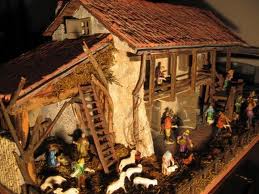
Jingle bells, jingle bells…here comes the time for Christmas decorations in Italy!!! The most important tradition is connected to the Nativity scene, called presepe or presepio in Italian language.

Every church and every family has its own presepe. You can find it in the middle of the squares, outside the shops, and in many public areas. The manger scene is a must but you can expect much more: the representation collect often the entire village!

When do Italians make a Presepe (Christmas crib)? They set up it  starting December 8, that is the Feast Day of the Immaculate Conception, and you put back in the storage room on January 6, that is the Epiphany.

Figurines for nativity scenes are made in many parts of Italy, but the  best are certainly coming from Naples and Sicily. Baby Jesus is added on Christmas Eve.

The Nativity scene representation has a long history: it is said to have origins with St. Francis of Assisi in 1223, when he builded a nativity scene in a cave close to the town of Greccio, which reenacts this event each year. There it has been held the first Christmas Eve mass and a nativity pageant.

Carving figurines for nativity scenes started in the late 13th century: thanks to Arnolfo di Cambio who had to carve marble nativity figures for the first Rome Jubilee held in 1300. The original nativity can be seen in the museum of Santa Maria Maggiore Church. Many are the museum dedicated to the “presepe”.

Il Museo Nazionale di San Martino is in Naples and boast a fab and very elaborate collection of nativity scenes starting from the 1800s. Il Museo Tipologico Nazionale del Presepio is under the church of Saints Quirico e Giulitta in Rome, and exhibits over 3000 figurines from all over the world! The museum has very limited opening hours: closed in the summer but open each afternoon December 24-January 6.


Top Italian Christmas Markets in the North: let’s go and discover it

The lovely Christmas Markets in Italy are good and big as well as in the cities and in villages throughout Italy. The market sells everything: toys, candy, Christmas items, handicrafts, ect. This is a funny way to taste also regional food, drink, and music!

Christmas markets are the Mercatini di Natale: let’s go and grab some funny and useful stuff! For example, if you are in Trentino-Alto Adige Region in the north of Italy you will find one of the best examples for Christmas markets. Many mountain towns display Christmas markets and you can find on sell everything: from really tacky items up to local handicrafts.

Trento holds one of the best Christmas markets: it starts at the end of November and offers more than 60 traditional wooden huts located in Trento’s city centre. While there don’t forget to see the large Nativity Scene in Piazza Duomo!!!

Venice turn Campo Santo Stefano  into a Christmas village in December:  wooden houses  in the piazza and stalls are all over, with a lot of high quality Venetian handicrafts.

Trieste holds its market called Fiera di San Nicolo the first week of December, while in Verona you will find a huge Christmas Market with over 300 stalls and tables. When?  The second weekend of December through December 13, that is Santa Lucia Day.

Turin holds a Christmas market during December in the Borgo Dora area, with a different kind of items: open all week and on the weekends, you will see also a big Christmas tree and a nativity scene, too. Not too far from Turin, Milan has also a Christams market in the historic center from early December through January 6, as well Bologna starting from late November through early January.

Genoa differs because, besides a Christmas market, holds also a winter fair with an exhibition of arts and handicraft products for sale.

In Florence, the children can visit the house of Babbo Natale (Father Christmas)! Of course you’ll find a Christmas market  during Florence Noel: this event starts at the end of November.   Siena holds a variety of Christmas markets during December and Lucca holds a Christmas market in Piazza San Michele throughout December 26.