Amalfi in the amazing Costiera Amalfitana

Amalfi CC BY 2.0, Alpha 350

The Costiera Amalfitana for its fertility and the amenity of the coast of its own sea and the fruitfulness of his fields of earth, is well-known ad well as for its historical and artistic beauty, natural wonders and culinary traditions. Indeed Campania and its Costiera Amalfitana is still one of the most beautiful area of Italy. Thousands of tourists from every corner of the world each summer hit the streets of Amalfi, Positano, Vietri sul Mare  in search of the attractions that have made this region one of the most recounted by poets and writers. The small town of Campania are able to engage all of your senses, giving you a memorable holiday. We will discover the splendid town of Amalfi, beloved among Brits and Americans mostly.

The town keeps its sense of marvellous stemming from the scent of the sea and the noble heritage of its seafarer Republic, who once fought against the like of Pisa, Genoa, Venice. The tourist flow reaches its peak in July-August, so it will be better to travel in the area either May-June or September, when it is less crowded and to take a bus on time is not being on a mission.

Declared a UNESCO World Heritage Site, one of the most celebrated natural wonder of the world,  the Amalfi coast  is one of the jewels of Campania in the province of Salerno. This area of ​​natural and artistic beauty goes from Positano to Vietri sul Mare, and welcomes, throughout the year, tourists of all the planet. So as the name suggests, the Amalfi Coast in Amalfi has one of its most important locations. If you have decided to come on vacation in a tourist paradise, Amalfi is really the right place where you can combine art, culture, sea, good fish and relaxation.

Founded  in the ninth century by the Romans, Amalfi became famous all over the world when it developed the maritime trade in the Mediterranean. His fame was outstanding when it became one of the four Maritime Republics. Amalfi, nowadays, has become a prestigious holiday destination and his reputation remained intact. From here you can reach other pearls of the Amalfi Coast in a few minutes such as Minori, Maiori or Cetara. Indeed Maiori and Minori are close such a beautiful nature and unique natural feature as the Fjord of Furore. You can reach it via bus or via 1200 stairs from the tiny village of Furore. Here the view is breathtaking: actually this is the only example of fjord formation in Italy!

The presence of landscapes of indescribable beauty and the immense historical and artistic heritage.  The town centre is quite small, and you’ll have no problem finding a hotel with a sea view, or just a short distance from the most important attractions such as the St. Andrew’s Cathedral, symbol of the entire coastline. Of ancient origins, the cathedral of Amalfi was built and rebuilt, following different styles: Romanesque, Baroque, Rococo and neo-Moorish. You can access the interior through a magnificent bronze portal, which is located on top of a spectacular staircase. The interior, dating mainly to the Middle Ages, it is very impressive. Among the works preserved here, you can admire the frescoes of the thirteenth century and Roman sarcophagi. Inside the crypt, accessible via a side door, you can enjoy an important relic of St. Andrew, patron saint of the town of Amalfi. Quite charming is the  Chiostro del Paradiso (“Cloister of Paradise”) built by Filippo Augustariccio between 1266 and 1268 and a burial cloister for noble families of Amalfi.  It is a  open-air museum, with Roman and medieval pillars and sarcophagi.

Near the cathedral are also several features shops where you can buy local products and nice souvenirs. Not far away are also the Museo della Cartiera, Inside it, there is the opportunity  to see all the old technologies for the production of paper (pile hammers, Dutch machine, paper machine in plan) that have been restored and made functional again. In fact it is a museum that is situated within a paper mill and traces the process of the ancient and famous paper “Wadding” of Amalfi. Fun also to visit the Civic Museum, the Museum of the Compass and the Duchy fishing.

At the foot of the staircase are some of the most renowned restaurants and pastry shops of Amalfi to taste sweet and delicious dishes of the local tradition. Gastronomic symbol of the town is the lemon, also known by the name of “sfusato Amalfi” used especially for the preparation of limoncello liqueur, typical product of these areas.

It’s nice and interesting to discover this small town during its typical festivals. Important is the festival dedicated to the Patron Saint Andrew, patron of fishermen and fishmongers. The celebrations in the coastal is on at the end of June and more specifically 25 to 27 June. According to the legend, in 1544 the saint unleashed a storm to prevent the terrible Saracen pirate Kair-Ad-Din conquered the city. This festival  culminates  by a procession around the country. The statue of the saint is carried up the beach and then be delivered to the fishermen who bring it to ride to the Duomo climbing the stairs for  a show not to be missed. The evening ended with beautiful fireworks.

Another wonderful event is the Historical Regatta of the Maritime Republics. An event that involves the town of Amalfi, Pisa, Genoa and Venice, taking turns to host the regatta. Every four years, on a day in the period from May to July, Amalfi is animated by a “medieval” spirit . The sports competition evokes the ancient (and dusted)  rivalry  of the four cities. Eight rowers on the galleons depart from Cape Vettica and arriving at Marina Grande for  a distance of approximately two kilometers. The regatta is preceded by a procession of figures in historical costume.

But the true wonder of Amalfi is the sea. Near the bus stop, a short walk from the Cathedral, you will find a small beach lapped by crystal clear waters, where you can relax and enjoy the natural beauty of this unique place in the world.

Valentine’s day in Verona: join the giant heart in Piazza dei Signori

san Valentino, Verona CC BY-NC 2.0, Stefano Bussolon

Valentine’s day in Verona: a great way to spend the day in love and happiness, surrounded by the beauty of incredible monuments and Shakesperian inspiration.

Although Valentine’s day history began in Italy, and it is an Italian culture traditions like it has become  over the years ‘Verona in Love’ (‘Un Cuore da Scoprire’), which takes place on 13th and 14th February in Veneto every year. Romeo and Juliet’s town is perfect to bring your Valentine into a romantic atmosphere especially during those days.

Piazza dei Signori is Verona’s main square,  known locally as the “heart of Verona”.where most of the celebrations take place and also the event for Valentine’s day.  A wonderful Valentine’s market is waiting the visitors here;  the stalls are set out in the shape of a heart.

Everything you could wish to find in a romantic market is here: locally produced food and drink, cheeses, heart-shaped decorations, cushions, paintings, ceramics.

There’s a large red stage placed at the top of the ‘heart’ of market stalls in the Piazza where Italian artists play a variety of music from modern to jazz, all day and most of the night.

A free chocolate tasting  is there for you and your beloved, and if you buy it, it will be always beautifully wrapped! Afterwauds, climb the belltower, the Torre dei Lamberti, to get an impressive view of the heart-shaped market is  which overlooks the square, using  a “two for the price of one” offer. Via Mazzini and the streets nearby will be lit by dozens of gorgeous red heart-shaped lights.

Do not miss a visit to Giulietta’s (Juliet’s) house! It is naturally one of the highlights  for the celebrations.  The house itself is free to visit on the two days of the Valentine’s party, and the front door is completely covered in love letters!!! On 14th they are taken down and judged for the massive love letter competition  at the ‘Casa Giulietta’,  where you will find also an archive of the best love letters from decades of celebrations.

An ancient dish: Stuffed Artichokes (Carciofi Ripieni)

 carciofi-ripieni

An ancient dish from Central Italy: Stuffed Artichokes (Carciofi Ripieni)
 
This typical Italian dish is really easy to make. The filling is open to different versions and innovation, but the traditional one is the following: you can stuff the artichokes with ham, salami, egg, Parmesan or Pecorino Romano, slices of bread melted in milk. In the Naples' version, one of the ingredients are the anchovies. Enjoy anyway!
Author:
Recipe type: Main
Cuisine: Italian
Serves: 4
Ingredients
  • 8 Artichokes
  • 1 egg
  • 1 loaf
  • 100 ml milk
  • 50 g Parmesan
  • 1 lemon
  • 30 g parsley
  • garlic (1 clove)
  • salt and pepper to season
Instructions
  1. In a bowl put the water and the lemon juice.
  2. Wash the artichokes, cut the stem to be used again in the filling, the tips of the remaining leaves, and remove the outer leaves at the base.
  3. The centre of the artchokes needs to be open in the middle. Then place them in the bowl with water and lemon.
  4. Place the loaf with the milk in a dish and let it soak.
  5. Cut in smaller pieces the stems of artichokes, chop garlic and parsley, put it in a bowl.
  6. Add the loaf, the egg, the stems' pieces, the Parmesan, salt and pepper.
  7. Mix all together
  8. Fill the artichokes' open heart.
  9. Place the stuffed artichokes in a pan with oil and some water.
  10. Cook on a low flame for about 30 minutes.


Faboulous beaches and food: welcome to Puglia

CC BY 3.0, Link

Travelling around the beautiful Puglia, the tourist can have many epiphanies: firstly, the beaches. From a rocky landscape to a smooth Maldive-like sand and natural reserves which include super beaches. Here a portrait of some beaches in the Lecce and Taranto areas, among which we start describing our personal beloved spot, Gallipoli.

Punto del Pizzo with its spike marks the starting of the beautiful and spectacular Gulf of Gallipoli, Lecce.Here it is difficult not to lay under the sun among lovely sandy beaches entered through fragrant pine woods which provide a refreshing shade for the international and local crowd.

The historic fortress island town of Gallipoli is unmissable if you’re in the area of Lecce and from this point on over 100km of coastline is to discover!

A few kilometres up you can find Rivabella, the little Caribbean seashore of the South: sandy beaches and fun in the numerous bar spread on the cost and on the sea-front! Stretchin right up to reach Taranto, interesting and clean low-lying rocky coastline mingled with the usual sandy beach, including the costaline of San Caterina di Nardó.

The sandy sea-front of Porto Cesareo is waiting for you, closed by its own promontory and overlooked by the Isola dei Conigli. About 20  kilometres more of untamed beaches between Punto Prosciutto to Acqua Dolce stretches along the south coast below Manduria region, which is also worthy to visit!

Following the road and heading north-west, you will reach the port of Taranto and the nearby towns with their own sandy bays. On the other side of Taranto, the coast goes west; following  the northern shores of the Gulf of Taranto, after 40km the Stornara Nature Reserve opens up full of sand.

A fantastic trip is waiting for all of you, indeed refreshing in the hot summer and equally interesting in spring time.

Discovering the Italian parks: Parco Naturale della Maremma in Tuscany

CC BY 2.0, Visit Tuscany

Tired of the same old same old in Tuscany yet astoninshing beauty of the towns? Discover the “secret seashore” hidden in the area of  Tuscany  called Parco della Maremma: it is a fantastic trip to be made when you  are in one of the most beautiful Italian areas.

Located between Monti dell’Uccellina and the pine wood of Marina di Alberese, limited by the mouth of the river Ombrone and the Trappola marshes, here a diversity of ecosystems co-exists since 1975 : The Natural Park of Maremma has been created to protect the flora and the fauna but also to fascinate the visitors.

The Mounts of the Uccellina dominate the central and southern part of the Park:  the highest mount is Poggio Lecci, 417 metres and the calcarous and silica hills are almost completely covered by thick vegetation. The lower part  is now utilised for grazing and olive groves.

In the Monti of the Uccellina there are towers and religeous buildings:  the ruins of the Abbey of San Rabano, the spiky towers of Castelmarino, Collelungo, Cala di Forno and the Bella Marsilia.

To the left of the mouth of the Ombrone there is a compact set of dunes covered for the main part by a pine wood. Boar and deer, but also porcupines, wild foxes, beech martens are some of the fauna spread all over in the park. To discover the beauty of this area, you can follow a number of different routes, asking or following the Park Rangers. The area also offers many different places you can spend the night.

North of Ombrone the flat lands are characterized by the Trappola marshes:  mirrors of water, called “chiari” or “bozzi”, can be  temporary and permanent. Here one can often see the Maremmani cows that live in the wild all year round drinking and resting. The ponds are home for a large number of immagratory birds in the winter, too.

Parco delle Madonie: alternative routes inside Sicily

Paco_delle_Madonie_080

Looking for a slightly alternative Sicily which still has to be written about? Parco Naturale Regionale Delle Madonie in Sicily, welcomes the visitor with its 40,000-hectare  of forests which include the nearly-extinct Nebrodi fir trees. The Madonie mountains will offer a great deal for fun thanks to its sunset, its amazing trees and a slow different and more ancient way of life that have little in common with the frantic and a la page coastal cities in  Sicily.

Located between Palermo and Cefalù, with the Madonie mountains inside  and Pizzo Carbonara (1979m), this area shows off a fantastic gastronomic tradition all made of raw materials to create delicious first and second course meal: meat, sausages, salami, cheese, olives, mushrooms, and fresh seasonal vegetables.

Many of the towns in the Madonie Park have a mediaeval origin:  the noble land-owning families ruled huge estates and built up magnificent castles in the area together with wonderful churches like the ones you can find in Petralia Soprana and Petralia Sottana facing one another on the hill. Children-friendly is Il Parco Avventura near Petralia. There are picnic areas and, phoning ahead, the visitors can request some local products, such as cheeses, hams, sausages for the day-out with all the family.

Castelbuono is capital of the Madonie area. In the old town peculiar is the production of “manna”: this pale, dense and white resin drips from ash trees when the bark is cut. It is largely utilised as a sweetener for local delikatessen. If left to flow before the definitive collection, the “manna” creates forms resembling stalactits. Apparently it has a strong curative qualities for stomach problems.

What to do? The Madonie Park is made for walking and hiking: many wonderful routes open to the guests, together with horse-riding and mountain-biking.


Piattoni beans and tubettini: a delicious different kind of bean

pasta e piattoni

Beans and pasta
 
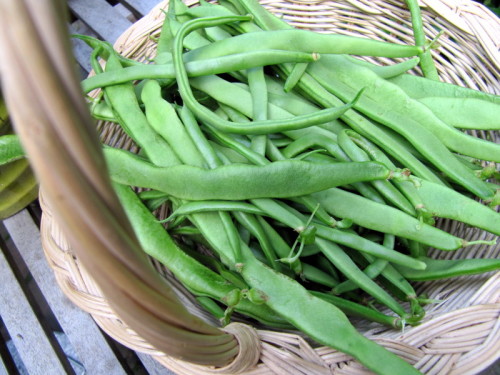
Tubettini with Piattoni beans means a particular type of green beans with a flat shape. You should prepare it with fresh tomatoes or tomatoes puree and a "soffritto" of onions (white for a sweeter flavour or red to gain more consistency). Below an easy and quick but always delicious recipe to prepare tubettini with this kind of beans as a main dish or a first course with lovely Italian pasta.
Author:
Recipe type: Appetiser
Cuisine: Italian
Serves: 4
Ingredients
  • 500 g of Piattoni beans (Flat green beans)
  • 1 Onion (white or red0
  • 100g of Tomatoes puree/a tomato can
  • 4 Tablespoons of extra virgin olive oil
  • Salt
  • Peperoncino (chilly peppers)
  • Pasta: tubettini
Instructions
  1. Wash and clean the beans, cut them in pieces.
  2. Preheat the extra virgin olive oil in a large pan, cut the onion in slices and add them to the pan.
  3. Let the onion sauté for a few minutes. Add all the beans and the tomatoes puree or the tomato from the can or 3 fresh tomatoes.
  4. Sprinkle with salt and cook the sauce for few minutes.
  5. Add 2-3 glasses of water and let the beans cook for about 20 -30 minutes.
  6. Serve very hot with peperoncino (dry hot chilly pepper).


green beans
Green beans

Sauce, eggs and Frattau Bread: a recipe from Sardinia

SONY DSC

In Sardinian, Carta da Musica aka Frattau Bread is a very fine crisp kind of bread baked by each family  in a wood oven at 4 in the morning on the chosen day. Frattau Bread lasts many days.

Eggs and Frattau Bread
 
Author:
Recipe type: Starter
Cuisine: Italian
Serves: 5
Ingredients
  • Carta da Musica - Frattau bread - 6 pieces
  • Eggs 4
  • Vinegar 3 spoonfuls
  • Grated Pecorino cheese 8 spoonfuls
  • Ripe tomatoes 1 kg.
  • Sugar (for the sauce)
  • Onion ½
  • Extra-virgin olive oil 1 dl.
  • Saffron
  • Basil 4 leaves
  • Salt
  • Pepper
Instructions
  1. The sauce:
  2. Put the onion in the oil in a pot and add the salt. Dissolve the saffron in hot water and add it to the pot. Cook until it becomes transparent.
  3. Peel the tomatoes and add them to the pot together with the sugar and the basil.
  4. Cook this sauce at a low heat (ca. 30 minutes) and add salt and pepper to taste.
  5. Poach the eggs in 2 litres of water with the vinegar. When they are ready, put them aside and keep them warm.
  6. The Frattau bread:
  7. You need to break it into pieces and put them into a large bowl with a little warm salted water.
  8. Put a spoon of the tomato sauce and a spoon of grated cheese on each plate.
  9. When the bread has softened, put it on the plates adding sauce and cheese. Serve at table with the eggs on top.
  10. Serve with Cannonau, a dry, ruby red Sardinian typical wine.


Torta Pasqualina: from Liguria a piece of Easter

torta pasqualina

This traditional tart from Liguria area shows a tiny pastry stuffed with veggie, ricotta cheese, Parmesan and eggs. As the tradition wants, prepared the Easter day to start the long eating session. In the recipe you can use the artichokes or the spinach, the fresh ricotta and 6 entire eggs. A particular characteristic of this tart is that the eggs inside: they are entire inside. Why? So the top will have 6 “holes” with the eggs inside. The pastry of Torta Pasqualina simply are made with flour, extra virgin olive oil, salt and water.

Torta Pasqualina
 
Torta Pasqualina: meaning a typical Italian Easter recipe from Liguria!!
Author:
Recipe type: Appetiser
Cuisine: Italian
Serves: 8
Ingredients
  • 400 g of Flour
  • Water
  • 1 Kg of fresh Artchokes or Spinach
  • 6 Eggs
  • 100 g of Parmesan
  • 1 / 2 Onion
  • 500 g of Ricotta
  • 7 Tablespoons of extra virgin olive oil
  • Salt
  • Black Pepper
  • Marjoram
  • Parsley
  • WINE: Golfo del Tigullio Vermentino (White Wine)
Instructions
  1. The dough:
  2. Put the flour on a table as a fountain, add salt, 5 tablespoons of extra virgin olive oil, water and mix all together until you obtain an elastic but firm dough, knead the dough for about 10 minutes more, then divide it in 6 parts and let them rest for 30 minutes covered with a towel.
  3. The stuffing:
  4. Clean well the artichokes and cut them, preheat the extra virgin olive oil in a pan, add them together with the onion cut in slices, put salt and the chopped parsley.
  5. Cook for about 15 – 20 minutes. Let them cool and place them in a bowl together with the ricotta, the Parmesan cheese, salt, black pepper and marjoram. Mix all.
  6. Preheat the oven to 180 degrees.
  7. Roll the 6 pieces of the dough to have a very thin pastry.
  8. On the bottom of a baking-pan put the first pastry and brush its top with virgin olive oil, put over it the second pastry and repeat the operation, and then put the third but do not brush with the oil.
  9. Now pour on it the mixture of artichokes and ricotta, makes 6 holes in it and inside put the 6 entire eggs.
  10. Cover the stuffing with the other three pastries always brushing the top.
  11. Close the pastry on the edges and bake the pie for 50 minutes or 1 hour, until the surface becomes brown.


Eating in Friuli: mix white wines and dreams

CC BY 2.0, Achilli Family

Friuli is a region which has an exciting discovery for every wine-lover! Why is so famous? Friuli region has a world-wide reputation for producing Italy’s best white wines.  The north east corner of Italy, bordering Slovenia and Austria, until the end of the First World War was part of the Austro–Hungarian empire.ot only San Daniele and frico to delight you and your family. Not only Udine and Trieste, the gorgeous capital with a lot of osterie and restaurant, pubs and agriturismo, not to mention a famous University! Tradition and modernity, the Austrian borders and a different sense of being Italian here make a magic environment where the tourist can breath still a genuine and sane feeling of countryside and peasant life, though wild nature and breathtaking mountains.

Here in friuli the masters of wine creates bouquet with marvellous fruity grapes that thanks to some peculiar conditions of the ground and the soil mix it up in a miracle!
Among the grapes that are grown here, white wines represent almost two-thirds of production. The Colli Orientali are smart hillside well-known for the incredible whites: the traditional varieties such as Tocai Friulano, Picolit, Ribolla Gialla and Verduzzo are produced here as well as the international varieties (Pinot Bianco, Riesling, Pinot Grigio, Sauvignon and Chardonnay). With a lovely minerality underlying the fruit, rich in taste and complex.

Are any reds here? Of course. Friuli-Venezia Giulia wines are mostly white, as to be said and underlined, but we can also add that exceptional reds can be found at the same time. Do not forget that Friuli Grave is in fact a totally red wine area. The range varies from Cabernet Sauvignon and Cabernet Franc to Merlot, Schiopettino and Refosco. The red wine varieties are decidedly cool-climate and this is why you can still find “un buon rosso” in this almost white wine land.

It is amazing to think that even though Friuli is a tiny region compared to Tuscany or Piedmont, and  the wines produced on its high hills and mountains are indeed only 2% of the overall Italy’s production, those wines (especially the whites) are truly comparable to the great wines produced in above mentioned Piedmont and Tuscany!!!

You need to Come over and immerge yourself in the beauty of Carso and Udine!

The local wines are rich and incredibly diverse and differentiate thanks to the number of grape varieties that are used in their blends. The creation of exceptional wines is quite a tradition, kept as a precious secret by the local winemakers.

The famous white wine produced in this region is the Tocai Friulano. A little curiosity: in order to avoid confusion that sometimes aroused between a Hungarian grape called Tokaj and a French wine called Tokay, the EU has asked to change the names for the French and Friuli grapes in 2006.

Which are the other fab local whites? Besides Chardonnay, Pinot Bianco, Pinot Grigio, worthy to try is Müller-Thurgau. You have to try also  the great Ribolla Gialla, the famous Riesling Italiaco and Riesling Renano, not to mention the extraordinary Traminer Aromatico. A note deserves Malvasia Istriana, to taste with the Adriatic seafood recipes.

Among the red produced in Friuli – Venezia Giulia we need to mention the variety you can find in Collio (Collio Cabernet), Merlot, Pignolo, Pinot Nero, Refosco dal Peduncolo Rosso and Tazzelenghe

Some interesting  infos for a unique red wine: Terrano is a wine made with the Refosco grape grown in characteristic red soil of Carso. The specific gradient of the sun and the soil of the Carso area  make a red wine low in alcohol, prescribed by doctors to heal digestive problems as well as to patients who need iron!!!

So not only tasty but also good to help you in some health problems. The food of the Gods is here in Friuli!