Spaghetti alla puttanesca: a guilty pleasure

vermicelli-alla-puttanesca-ricetta-classica   Photo CC-BY-SA by Francesco83

The Spaghetti alla Puttanesca has a saucy history, almost as rich as the recipe in front of you. The dish’s scandalous name gives life to many legends.

Many are in fact the theories about the origin of pasta alla puttanesca: according to some, the dish was invented in the early twentieth century in some brothels in Naples as a “refreshment” for guests returning from “the labours of love”, while for others this would be the dish that just women who worked in the brothels ate at dawn to recover from the stressful night.

One of the most popular stories around this delicious spaghetti reports that unfaithful wives cook this dish for their husbands in a great hurry to be soon reunited with their lovers.

A very colourful origins for one of the highlights of Campania’s local tradition!

The origins (without involving any brothel)

The historical background of spaghetti alla puttanesca shows different interpretations.

In “Napoli at table”,  Arthur Schwartz states that etymologically: “(the term puttanesca) was the subject of the efforts of the imagination of many scholars, who have tried in every way to find the solution to the riddle. Some say that the name of this recipe derived, at the beginning of the century, by the owner of a brothel in the Spanish Quarter, which was usually refreshment guests with this dish, taking advantage of the speed and ease of preparation. Others refer to the undergarments of the girls of the house, to attract and entice the eye of the customer, probably wore linen of all kinds of bright colors and full of promising transparency. The many colours of this dress would find themselves in the homonymous sauce: the green of the parsley, red tomatoes, purple dark olive, gray-green capers, peppers garnet hue. Others argue that the origin of the name is to be attributed to the imagination of a young girl’s life Yvette the French, who was inspired to his roots in Provence. Yvette, probably, was not equipped with only fantasy, but also a sense of humour and irony rather caustic, perhaps exploited to celebrate, through the name of this dish, the oldest profession in the world. [… ]”(pg. 164).

A different interpretation is given by Jeanne Carola Francesconi in  “La Cucina Napoletana”: […] These macaroni, although the richest of their relatives, they called marinara. But immediately after the Second World War, in Ischia, the painter Eduardo Colucci, do not know how it cause, they renamed with the name that is now generally known. Colucci, who lived for friends, in summer lived in Punta Mulino – at that time one of the most picturesque corners of Ischia – in a tiny rustic and construction; room with kitchenette and a terrace in the middle of which rose a olive tree. Besides the usual closest friends, paraded on the terrace the most varied Italian and foreign personalities. And he, having offered as an aperitif a fresh and genuine vinello Ischia, often improvised a dinner of macaroni that these were his specialty. […]”.

Another version was instead provided by the architect Sandro Petti, who claimed in an interview that he had invented him the sauce “puttanesca” in his restaurant in Ischia. According to the architect, in fact, this famous recipe was given birth by his culinary genius, when one night arrived hungry at the restaurant a group of his friends. Despite the cook had already left and was not in the kitchen pantry almost nothing left, they insisted to eat something, asking breasts prepare “una puttanata qualsiasi” (indicating that they were content to something simple). So it was that the architect began in the kitchen, took a few simple ingredients and the sauce was invented by the intense flavour and served them to friends over a plate of “pasta al dente”. These appreciated so much the food, that convinced Petti to insert the dish on its menu with the name of “puttanesca” in memory of the request made that evening.

The regional versions

The puttanesca sauce recipe is a very common both in Campania and in Lazio, of which there are several versions: with some chili, other without anchovies, capers and parsley or others with black pepper. Whether its past, the dish holds true as a classic Italian dish.

Spaghetti alla puttanesca
 
Author:
Recipe type: Main
Cuisine: Italian
Ingredients
  • Serves 6:
  • 3 tablespoons butter
  • 3 tablespoons of extra virgin olive oil
  • 6 anchovies pounded to a pulp in a mortar
  • 3 cloves garlic, sliced fine
  • 200 g of black olives, pitted and sliced from Gaeta
  • a spoon salted capers washed and roughly chopped
  • 600 g tomatoes peeled and cut into strips
  • a spoon chopped parsley
  • Salt if necessary
  • 600 g of linguine
Instructions
  1. Put a pan on the stove rather large and be warm with butter and oil, then add the garlic and finely chopped anchovies and previously pounded in a mortar or chopped finely.
  2. When the garlic begins to brown and anchovies melt, add the olives pitted and cut in half, roughly chopped capers and tomatoes peeled and filleted.
  3. Fate then season the sauce over high heat for a few seconds, stirring constantly.
  4. Meanwhile, cook the spaghetti in salted water, drain and place in a bowl in which they serve, then cover them with the previously prepared sauce and sprinkle with parsley.
  5. Mix and serve warm your delicious spaghetti puttanesca!
Sustainable Christmas markets in South Tyrol

snowflakes-538223_1280

Christmas markets in green South Tyrol: the climate is still mild in December, and  the snow begins to whiten these beautiful landscapes. In any case, already now the magical atmosphere of the Christmas Markets reigns. It is a fantastic place of elves, fairies and children. And for men who do not want to become ever older.

This precise effect is when you go to the Markets in South Tyrol, a mixture of tastes and knowledge, a mix of beautiful people and a lover of his land, cultures and languages, traditions and innovations. Innovations are at hand: because this year the Original Markets in South Tyrol / Südtirol – Bolzano, Merano, Bressanone, Vipiteno and Brunico – become “Green Event”, meaning that the different events were planned and organized according to the criteria of protection of environment, enhancement of regional products, resource efficiency, waste management, sustainable mobility and social responsibility.

The organizers of the 5 Original Christmas market in South Tyrol have been working for three years, under the guidance of the Eco Institute Alto Adige, to implement the sustainability criteria in the planning, organization and implementation of the event: and this year the Original Markets in South Tyrol has finally received the certification of “Green Event”.

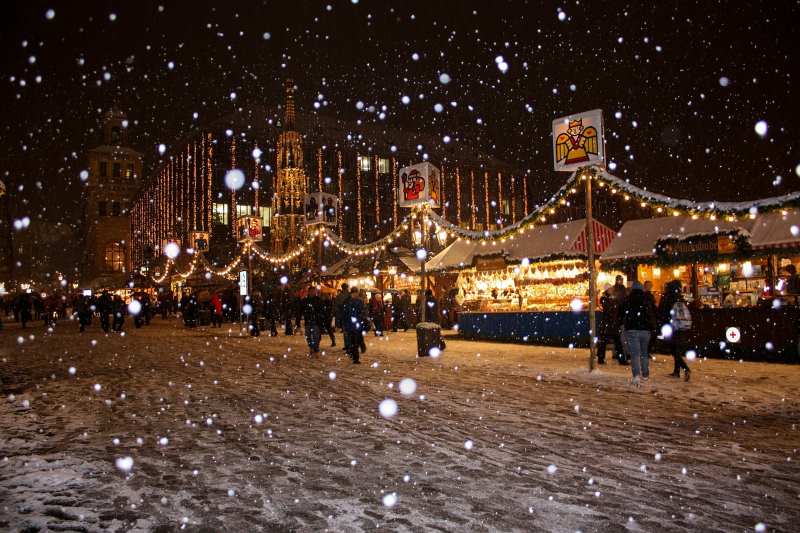
And so, surrounded by the smell of mulled wine and roasted chestnuts,freshly made pretzel,  glorious soups and barley and chives, you will enter in these lanes of stands and shops which are truly spectacular, where the wisdom of the hands of the artisans is one with the unique atmosphere of Christmas time. Not to mention those in which you eat divinely!!

Bolzano is dressed up and everywhere you can hear Christmas music, lights, the sweet smell of cinnamon and mulled wine. The famous Christmas market in Bolzano takes place every year on the first Advent until December 24. In all over 80 stalls offering their products.

In the beautiful setting of the Passer Promenade awaits for you the traditional Christmas market in Merano. The medieval stalls with local specialties such as a honey wine, with the so-called “Feuerzangbowle” or even with delicious buckwheat dumplings are there for the visitors. And of course on offer the traditional crafts, from handmade candles, slippers or even decoration for the Christmas tree there is everything and more.

Piazza Duomo hosts the Christmas market in Bressanone with a special atmosphere during Advent. It is the ideal place for a leisurely stroll through the stalls, after a day on the ski slopes of the ski area Plose or at the indoor pool Aquarena. Check also the Nativity Scene Museum which is located inside the Palazzo Vescovile.
The Christmas market of Brunico is located within the walls of the city and attracts young and old with its 35 wooden stalls offering traditional products and culinary specialties from the region. Tradition and craftsmanship are the centre of attention.
In the main square, dominated by the Tower of the Twelve, the Christmas market of Vipiteno  every year fascinates its visitors. A crib made with statues made completely by hand, located at the Tower of the Twelve is also a small highlight of the market in Sterzing. In the various food stands drinks and of course the goods and sweet mulled wine.

But what is a Green Event? Well, it means to become sustainable in everything, in every aspect relates to the management of markets. It means listening to the environment and people, recognize the impact that an event that attracts thousands of visitors a year can have on the territory and preserve it.

 The collection of waste is carefully organized with containers for paper, cardboard, plastic and glass, while in the food stalls is collected separately also the organic fraction. The staff is responsible for the separation of waste and emptying the containers.

The food stalls offer mainly regional products (most of the products come from certified organic agriculture, while products such as coffee, tea, cocoa and sugar come from fair trade). On the menu products are distinguished by special endorsements, such as “regional product” or “vegetarian”, and in most every food stand must offer at least one vegetarian dish. Mineral water, soft drinks, mulled wine and beer are sold in returnable containers or plug and are completely banned the drinks in cans. Are not used disposable tablecloths, where possible using reusable dishes, are not covered single dose packages and the napkins and paper towels is only recycled paper.

The stands, all wood and reusable for multiple years, the offered goods is for the most part of local origin and traditional production. Decorative lights are LED energy-efficient and light up just at dusk. In general, then, for decoration were used real trees and locally sourced which will subsequently be caught in the cycle thanks to central heating. And an eye to noise pollution, too: no music at high volumes and areas of silence to visitors for a few moments of relaxation.

And, sure, even visitors can be  greener by using public transportation and moving between different markets with the Mobilcard, renouncing to wrap all the presents, so as to produce less waste, making sure to buy products and gifts from  local production in order to encourage short journeys and consuming food and drinks at the same stand, avoiding to bring from home disposable packaging.

Until 6 January 2015, therefore, the five original markets in South Tyrol make you realize that reconciling such an important event with the respect for the environment can be done, among other things, while strengthening the overall image of South Tyrol as the “Green Region” for real.

Other Christmas Markets in South Tyrol:
Alpine Advent Sarntal (November 29-December 21)
Country Christmas at Ortisei (December 4 to 28)
Christmas in Castelrotto (December 5 to 28)
Advent in Glurns (6-8 december)
Christmas Market in Val Martello (6 to 15 December)

The Tuscan wine roads

CC0 1.0

Tourists come from all over the world to enjoy the Tuscan wine roads. Can you imagine that there are 14 as a whole? Let’s discover them!

1. Strada del Vino dei Colli di Candi e di Lunigiana (The wine road of the Candi and Lunigiana hills)

Our trip starts in Pontremoli, going to Fosdinovo and to the famous Castello di Malaspina. Afterwards, we drive to Carrara, then we go to Massa and Capanne. This is the most northern wine road in Tuscany and the wine you can find in this area is the Candia, a very light white one, lovely for  fish dishes.

2. La strada del vino delle Colline Lucchesi e Montecarlo (The wine road of the hills around Lucca and Montecarlo)

Lucca is the first city to visit; then, from Santo Stefano we go towards San Quirico di Moriano to arrive at the Ponte a Moriano. From here, keep going over Colle, Valgiano and Gragnano, until  Montecarlo. This road is located south-east from the Candia wine area and it is famous for its white and red wines.

3. La Strada Medicea dei Vini di Carmignano (The Medici wine roads of Carmignano)

This road has an ancient origin and goes around the Province of Pistoia and Florence to the small Province of Prato. In towns like Poggio a Caiano, Artimino and Carmignano we will find DOC’s wines such as the Barco Reale di Carmignano, the Carmignano Rosato or the Carmignano Rosso as well as the Carmignano Rosso di Riserva.

4. La Strada dei Vini Chianti Rùfina e Pomino (The wine roads of the Chianti Rùfina and Pomino)

The starting point will be Pontassieve sull’Arno towards Rùfina. We will reach the Medici-villa Poggio Reale, where is located the Museo della Vite e del Vino. After a visit, we can go on to Londa. This is the first wine road ever developed in Tuscany: direction South-East from Florence, between the Mugello and the Casentino area, on the border with Emilia Romagna, inside the area of the red wine Chianti Rùfina (DOCG) and the white wine Bianco Pomino (DOC).

5. La strada del vino delle Colline Pisane (The wine street of the Pisan hills)

From the famous town San Miniato,  well-known also for its white truffle, we will gently pass over the Pisan hills towards Pisa. In this area is renowned the red wine Chianti and the Chianti delle Colline Pisane (both DOCG). Other DOC wines of this area are the white wine Bianco Pisano di San Torpé and the Colli dell’Etruria Centrale.

6. La strada del vino di Montespertoli (The wine roads of Montespertoli)

Montespertoli is far 30 km South-West from Florence; here we can find the Chianti di Montespertoli and the Chianti Colli (both DOCG) and the Colli dell’Etruria Centrale (DOC).

7. La strada del Vino Chianti Colli Fiorentini (The wine road of the Florentine hills)

The whole area around  Florence includes the Chianti Colli Fiorentini (DOCG). Here in the area worth a visit is  the Florentine family Antinori’s “cantina”: this wine-cellar is famous all over the world!

8. La Strada del Vino Vernaccia di San Gimignano (The wine road of the Vernaccia di San Gimignano)

Direction North-West from Siena and our trip will begin with the historical San Gimignano. The nexttown is Pancole, then Libbiano,going North-East. Here the real  white wine Vernaccia di San Gimignano and the red wine Chianti Colli Senesi (both DOCG), together with the red wine Colli dell’Etruria Centrale and the white wine San Gimignano (both DOC).

9. La Strada del Vino Terre di Arezzo (The wine road of the land of Arezzo)

South-East from Florence we arrive to visit  an area pretty famous for its DOC white wine, such as the Bianco Vergine di Valdichiana. Also the red wine Chianti DOCG is produced here. From Cortona, the landascape of Valdichiana (Chiana Valley) and Lago di Trasimeno (Trasimeno Lake) will feed your eyes as the hills and peaks of Monte Amiata will do. Driving north, we reach Castiglion Fiorentino and Arezzo, a town with Etruscan origins.

10 La Strada del Vino Costa degli Etruschi (The wine road of the Etruscan coast)

From Montecatini Val di Cecina we will pass through Montescudaia, Cecina, Bolgheri, Castagneto Carducci, Sassetta, Suvereto, Campiglia Marittima, Venturina until the harbour of Piombino. The DOC white wine Bianco della Val di Cornia (Suvereto) is the king, here. This wine road continues up to the Island of Elba, covering the whole island. Here the white Bianco L’Ansonica and the red Rosso Aleatico are to taste, together with the famous Sassicaia dei Conti Incisa della Rocchetta. The Sassicaia is by many clapped as the best Italian wine ever.

11. La Strada del Vino Monteregio di Massa Marittima (The wine road of the Monteregio di Massa Marittima)

This road starts North at the thermal spring Terme di Bagnolo. The next town to visit  is Monterotondo Marittimo; then Massa Marittima and Scarlino, until reaching the coast (Follonica and Castiglione della Pescaia). It is possible to go backwards, passing through Vetulonia with its Etruscan necropolis, and then Gavorrano, Montemassi and Roccastrada. The DOC red and white wine to try is Monteregio di Massa Marittima.

12. La Strada del Vino Montecucco (The wine road of the Montecucco)

Part of the four existing Maremma’s wine roads, it is a trip inside the Maremma and  through the Monte Amiata’s area.

13. La Strada del Vino Nobile di Montepulciano (The wine road of the Vino Nobile di Montepulciano)

This area winds between Val d’Orcia (Orcia Valley) and Valdichiana (Chiana Valley). The road starts in the north with Abbadia going towards Montepulciano,  Cervognano, Acquaviva up to S. Albino. After two years, the wine here can be called Vino Nobile di Montepulciano DOCG: it is one of the most important Italian wines. Very tasty is also the Rosso di Montepulciano DOC.

14. La Strada del Vino Colli di Maremma (The wine road of the Maremman hills)

In the south of the Province of Grosseto from Capalbio towards Magliano in Toscana we drive along until reaching Scansano. The famous Morellino di Scansano DOC was born here and it is a red wine of a very intense colour. From Scansano, again up North until we reach Istia d’Ombrone. Going backwards, there is Pitigliano and its white wine Bianco di Pitigliano.

In many cases, all these small villages represent the most famous historical villages of Tuscany which attract a lot of tourists. Here you can find caracteristic accommodations such as farmhouses or scattered hotel (look at this).


Love 2014: New Year’s Eve in Venice

venezia-love-capodannoJoining  Venice for Love in 2014 event means  to wish for yourself a Year of Love !
This year the New Year Venetian will again throbbing hearts in one of the most important nights of the year dedicated to love.
Once again, the event of the New Year will culminate in a choral, big kiss in unison as a message of love, peace and brotherhoodThe appointment of new year is richer with LOVE New Year 2014 in Venice that will involve thousands of people in this great kiss to seal the new year at the stroke of midnight.

A simple and meaningful gesture that will start the new year, and an event intended to be the focus of media attention as a symbol in the memory of the city and of all those who will be part of this new, unforgettable magical Venetian night.

The musical entertainment will be accompanied by the usual toast, and at midnight the Bacino di San Marco will become the scene of a fireworks display: spectacular fireworks light up the New Year’s Eve.
Two squares are allocated to this great performance: Piazza San Marco in Venice and Piazza Ferretto in Mestre, the latter location in support” of the most romantic heart of Venice and suitable for a younger audience. The actors are all those who decide to celebrate the first day of the new year in the spectacular setting of the city of the lagoon, one of the most romantic places in the world. And how can we celebrate the location with the largest group kiss you’ve ever seen? The performance will be followed by a lot of animation course in both squares: music, dj-set, fireworks and special effects, with guests of great appeal.
But everyone will be there, in the shadow of the Palazzo Ducale and the Campanile of the Basilica, wait for the countdown that will lead at 00:00 of the new year, to be able to kiss your partner or maybe, why not, the person close to you as a gesture of good luck for the coming year full of love.

History of the event

The New Year Love” was a truly incredible success since it was launched in 2008 and since then it  has been seen as a way to celebrate the strongest feeling in the world, but it certainly is not just participate in a kiss record here that attracts thousands of tourists and that makes Venice (along with Naples), the city in Italy that is more inclined to celebrate their anniversaries in the square. In fact, if midnight will be marked by the passion of the group kiss, the “beforeand after” kiss promises are not to be outdone.
The events related to the celebrations are so many, starting from the Bacino di San Marco where there will be a futuristic spectacle of fireworks that light up the New Year’s Eve that, thanks to the mirror of the lagoon and some special effects, will multiply to give great suggestions. During the evening there will be anywhere performances of street artists, projections on buildings, Christmas lights and to follow, of course, lots of music live (to know the artists we refer to our study on New Year’s Eve concert in the square, constantly updated).
In truth every channel, every square, every corner of the most hidden secrets of the city, will host an event, whether spontaneous or organized in collaboration with the City or the Province, involving tradition, culture, entertainment and glamour of course, as the city of Dogi imposes. There are also alternative proposals, such as midnight on a boat, watching the show directly from the sea: for this opportunity, please contact directly to one of the many small travel agencies Venice.
For the square of Mestre, here too is expected to go wild with music, along with entertainment and DJ recall.

Getting around  the schedules of Love 2014, the advice is to arrive in the square chosen quite on time, for the past editions of the event have become a symbol for the media own very large number of participants involved.

Last year, for example, when the theme of Love in 2013 was “White Venicewith carnival inspiration, saw the approaching (26 January) the start of the other big event that introduced the lagoon city in the world , the persons present at midnight in Piazza San Marco have been about 70,000The main problem will still be the approach to the city: if you arrive in the late afternoon of 31, parking will be a very difficult undertaking!

Still top secret the theme of the event this year, but according to rumours it will probably still “White Venice” and it will still be communicated shortly to allow those who decide to exchange at midnight this sign of universal peace to choose accurately the dress-code of this peculiar Venetian night, undoubtedly the longest in the piazzas.

If you love music, you can double the fun with the events in Teatro La Fenice in Venice for New Year 2015 also proposes a series of concerts with the great conductor Daniel Harding to the direction of the orchestra. Between the end of December and beginning of January there will be three performances of this unmissable concert, where they will perform the Symphony no. 7 by Beethoven and pieces of Italian operas.

The New Year’s concert in 2014 at the Teatro La Fenice in Venice will be held December 30 to 17, 16 and December 31 to January 1 at 11:15. The last concert will be broadcast live on Rai 1.


Misano Adriatico for beach lovers and F1 aficionados

circuito_2

Misano Adriatico has  its roots in the fertile Roman period. The name derived from that of various gens who moved  to live in the countryside of Rimini. In the 3rd century. B.C. in the territory of Misano came in fact “Gens Mesia”, thanks to “Ariminensis ager”,  the number of lands and possessions of Rimini that the Empire lavished to war veterans or to the nobles of Roman society for special merits.
The history of Misano is connected  with Rimini, like many locations in  Romagna. From 1295 to 1528, Misano lived moments of glory and power under the guidance of the future  capital of the province in a prolific period of history and art. Thanks to Malatesta, who did even build a castle here (today there are unfortunately only ruins), Misano became a splendid town. The Romagna then with the decadence of the “signori” become prey of the Pope’s  greed. As soon as the  hegemony of Malatesta flakes and until the unification of Italy, Misano belonged steadily to the Stato Pontificio.

In 1938 the town was known, however, with another name:,”Villa Vittoria”: it had this name since 1862, but then during the fascism that agricultural area became “Misano Adriatico”. The name change does it profit, and in the boom years Misano becomes highly tourist, tracking and seeds thrown in this direction already in the thirties. Today we have many well-known structures, such as hotels and hotels, residences and camping.

Highlights

For fans of the beach and engines, Misano Adriatico is the tourist destination to visit if you have a F1  passion. To spend the holidays in the city of Misano Adriatico means definitely to get you  inside history and culture, looking for inland castles and medieval fortresses.
The beach at Misano is among the best in Riviera: umbrellas, lifeguards, rescue services at sea. The accommodation facilities for families offer great spaces: games for children, and there are many sports facilities at the beach with the bowls, beach volleyball, beach basketball gyms.
In the evening you will end up on the piers of Misano and Portoverde: you might want to be really romantic and go with your partner for a ride on a boat along the coast in the sunset!

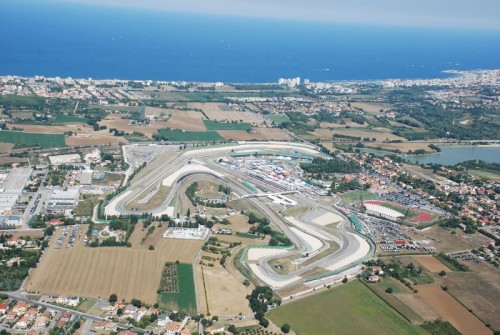
The Misano World Circuit, the heart of the booming Romagna

The Autodromo Santamonica in Misano Adriatico, now called  the Misano World Circuit, is of great interest, too. The Superbike World Championship and the the European Championship Truck are hosted here, too. During the weekend you can also see the free practice in the circuit. Experience the thrill of renting the track all day: the Autodromo Santamonica is the only facility in Italy to be completely illuminated  at night.

The Misano World Circuit, as it is called today, brings the charm of  breathtaking races to all the F1 aficionados:. Athletes from around the world arrive in Misano Adriatico to see motorcycles and cars flying along the dangerous curves. It was designed and built by engineer Cavazzuti under the guidance of the great Enzo Ferrari. The track was then tested in 1972.
If you are passionate or just curious of the highly anticipated Moto GP, look at offers for stays and experience the racetrack in its splendid matches.
The Romagna, you know, is a land of great drivers: Loris Capirossi, Marco Melandri, Marco Simoncelli, Mattia Pasini, Valentino Rossi and Alex De Angelis of San Marino that you will see  into challenges on the asphalt in the Santamonica.
Misano Adriatico and the surrounding hills

Misano Adriatico lives immersed in local tradition and the thousand-year history of the Middle Ages and Renaissance. Pedestrian areas coloured by evening markets, a golden beach and quiet, a promenade of 2 km along the seafront, islands of green in the centre complete the picture of this town. Thanks to the organizational structures and the quality of bathing water and the beach in Misano Portoverde, starting in 1989 the town  has  been awarded several times with the blue flag of the European Foundation for Environmental Education (FEE). This award crowns years of commitment to environmental protection. Come and discover the green town, then!
The  east area of Misano Adriatico is starring the beach, and thanks to its proximity to Rimini and Riccione, the fun continues all along the Adriatic coast, while south-east there is to visit the River Basin and its natural oasis, located along the its slopes.

Also its surroundings are very intriguing.
To the southwest there are the hills with a view that looks hinterland to ancient medieval villages to discover. Misano Adriatico is in fact just a few kilometers from the MarcheRomagna, easily accessible for tourists who want a holiday with more cultural visits to historical and artistic heritage.
From Misano Adriatico you can head to San Marino and Urbino, but also to Verucchio, the cradle of the Malatesta, whose Rocca allows visitors to embrace with his eyes all the coastal part up to Rimini. Montegrimano with its spas facilities  and Gemmano with the Caves of Hell, characterized by the presence of karst stone are masterpieces of nature.
Turning to the castles and fortresses, strongly recommend Montegridolfo with the best preserved castle of the Marche Romagna and other destinations in the same way as precious as Montefiore, famous for its beautiful fortress, Torriana and Montebello again with imposing fortresses.
A visit is worth to Saludecio, known for its many events of  cultural and gastronomic tone, and Mondaino with its Palio del Daino.
Finally, immerse yourself in the village of Montebello to discover of the ancient legend of Azzurrina.

Do not forget that Misano is not far  from other important Italian locations; just 15 km from the fun of Rimini, 40 km from San Marino, 45 km from the marvellous Urbino, 10 km from Gradara an its romantic and tragic castle, 65 km from Ravenna and the Bysantine remains.

Sand and sea for your happy Christmas in Rimini

sand nativity

For the Riviera of Rimini has always been a goal to be original and fun! have a look and enjoy spending  your Christmas holidays and the New Year’s Eve  with many funny Rimini’s winter events on the coast, which  is varied and caters for all tastes.
In particular, you can celebrate the New Year in a unique way and in Romagna, especially in Rimini, the opportunities for fun are manifold. The city  is in fact ready to meet all the demands for all tastes.
For New Year’s Eve 2014 several last minute of the various travel agencies that make the city so cheap and economical for all budgets, especially those of young people who do not have huge ability to spend and spend.
The New Year in Rimini is truly a great experience, a dream come true for everyone! A classic for many the New Year in Rimini: in fact in the “entertainment capital of Italian” for December 31 sees the great celebration in the square, waiting for midnight appointment, while you uncork the champagne and celebrating together the arrival of 2015 in Rimini with residents  and tourists.
The New Year’s Eve comes with the excellent local cuisine from the most exclusive to the nice family-run inns with a tons of piadina, gnocchi, lasagna, ravioli, tortellini, fried fish. And why not try ethnic dishes on the night of New Year’s Eve? The dinner may be a chance to taste different dishes.
The fires on the water and the sand are part of Christmas preparations on the coast! So many great and beautiful nativity scenes as the Sand Crib on the beach in Rimini and the fab Christmas market, loved by children and adults.
Events, famous disco-clubs until dawn, and midnight dinners to taste the delicacy of Rimini  that will delight you in the withering of winter as it did in the summer sun shining!


Between the Sand crib  and the Christmas markets
The Sand Nativity is a newly born  but already firmly in the tradition of Rimini and already dubbing, with clones in Marina Centro, near the beach of Boscovich square, and Torre Pedrera. The latter is taken care of by the Academy of Sand and offers a landscape theme that changes every year for more than 200 characters caught in their daily lives, according to the dictates of the Neapolitan tradition sprayed with local color and folklore of Romagna.

How to get there? Simply taking the bus: the number 4 stops in front of you at the baths 64 and 65 where you will find the magic of the sculptures in the sand.

Instead the Nativity in Marina Centre takes you  from the Annunciation to the Nativity the Magi among the ancient Ariminum that emerges from the art of the sculptors. The issue, therefore, is a classic of the Nativity, set in the background of the town of Rimini as it was in ancient times. Also here are mixed with entertainment and shows many of the gastronomic events.
The cribs will be finding open from early December troughout the Epiphany and the layout is partly within the warm environment of an enlightened and open in the evenings, and partly outside.

The Sand Nativity is becoming a very special and unique attraction: increasing year after year the numbers of visitors who walk their path through the massive sand sculptures that reach up to 6 feet tall. Free admission for these and for other cribs Rimini throughout the city, such as that which lies at the foot of the Arch of Augustus!

And why after the statues of sand, don’t you walk  into the centre  of the city illuminated by large trees with Christmas classics Christmas markets? Dozens of stalls along the Corso d’Augusto, Piazza dei Tre Martiri, Piazza Cavour, Piazza Malatesta,  full of … everything: you will find local handicrafts in wood, iron or silver, the Christmas decorations glass, ceramics and wood, all completely hand-painted. In the markets you will also find jewelery, costume jewelery, as well as typical products of Romagna with a side of entertainment for children, concerts and choirs !!
In recent years, one of the main event is  also a train led by Santa Claus, who will bring you around the city centre.

The New Year’s Eve  in Rimini between past and future

Let’s play: go to visit Rimini with the ghost of New Years past. What will we find?
Not surely Uncle Scrooge, but a thousand initiatives that have moved the 2014  as the direct RAI from Piazzale Fellini with the show “The coming year” with guests and concerts of big Italian music. Check the calendar of events, Here some more infos in the official Rimini website, there will be surprises for everyone as every year! The accommodation services in Rimini, indisputable heart of the Riviera, have been attracting thousands of tourists in winter as well as in summer for more than 150 years.

On 31 December, with music and fun for the young people who choose the advantageous offers for the New Year’s Adriatic coast and want to go to Rimini for clubbing all night long. In all the clubs of the Riviera, and before going to bed, the dawn will rise on the horizon and will offer you the rays of the sun in the new year. For this reason the hotels and residences are often affiliated with the most famous clubs of the Riviera and are well connected with the places of the main events of the New Year.

Despite not having a crystal ball, yet we continue to play and take the hand of the ghost of the future for New Years present a fantastic initiative for 2014 in Rimini, which  features also a winter market and many sand cribs for a more family-oriented  entertainment.


A winter dream called Aosta and its valley

Aosta
Aosta CC BY-SA 3.0, Link

Aosta Valley is the smallest region in Italy; in its northwest, it is located between France and Switzerland.

The capital of the Valle d’Aosta region , has more than thirty-four thousand inhabitants. It is located in a large basin of Baltea tributary of the latter, the Buthier.The valley is surrounded by the mountains of  Punta Chaligne , Becca Viou and Emilius.

At its heart are its  peaks (the region is made of mostly mountains). Here we can find the highest peaks in the Alps: CervinoMonte RosaGran Paradiso and the king of them all, Mont Blanc, which at 15,781 feet is the highest mountain in Europe, the roof of the old Continent.
Those who are not happy with climbing can certainly use the comfortable, yet exciting, cable car; catch it just a few miles from Courmayeur, one of the most important ski resorts in the world.
In this setting of high  mountains and diverse valleys sits the oldest National Park, the Gran Paradiso, where it is still possible to see wildlife and animals in their natural habitat. Prepare yourself for hrilling encounter with the  ibex, chamois, eagles and marmots. They all live in vegetation that changes according to the surrounding environment and seasons.
Historically, the Aosta Valley is a land of contact between Italy and France; such element is also reflected in the region’s official bilingualism and its special status as autonomous region. Aosta has always been a strategic hub passage between the Alps today thanks to the Mont Blanc and the Great St. Bernard, once through the Alpine passes, was the passage way between the North and the South, and stage of the Via Francigena. This region also offers amazing natural attractions, as well as other cultural and traditional treasures lie in its cousine.

The only province of the region is Aosta (regional capital). When we think about the Aosta Valley, we immediately think of the ski resorts of Cervinia, Courmayeur and Pila, very famous all over Europe as the destinations for anyone who loves winter sports.
Along the valley that goes from Pont Saint Martin to Courmayeur,  There are evidence of the region’s rich feudal history, and offer visitors the opportunity to follow an incredibly and interesting route. You can count 82 houses that stand on the valley, including primitive buildings and fortress, residences and watchtowers.

The most famous castle in the Aosta Valley is called the Castello di Fénis, which off a collection offers a collction of the best defence techniques of the feudal time; its refined interiors shows the wealth of its former occupants. Other beautiful castles are the Castle of Issogne, Sarriod de la Tour, SarreSaint-Pierre, and Ussel.
The road dotted by the aforementioned fotresses leads to Aosta, a mix of Roman and Medieval history, enriched by peculiar traditions.

Roman Aosta
Augusta Praetoria, Rome of the Alps, was founded in 25 BC Emperor Augustus, who defeated and subjugated the indigenous population  of the Salassians.
The city still proudly displays the many testimonies of great value left by the Romans, such as the Theatre and the Amphitheatre. In the first structure survives a massive 20 meter high facade and a width of about 80, which stands picturesquely against a bunch of snowy peaks. The two buildings were connected by a corridor, then incorporated in 1200 from the convent of Santa Caterina. The Arch of Augustus was built instead to celebrate their victory over the Salassians. The majestic Porta Pretoria is one of the best preserved city gates of the imperial era.

The Collegiate Church of Saint Orso is one of the greatest artistic religious in the Alps. It was built on the remains of an early Christian church where he had taken refuge Orso, evangelist enemy of the Arian heresy of Irish descent, who took charge of a popular uprising against the heretical bishop Ploceano. The most important Romanesque building of the year one thousand, was enriched by a magnificent fifteenth-century priory built by George of Challant, fine humanist.
The church boasts extraordinary artistic as a cycle of frescoes in the year one thousand, a cloister decorated with classic fancy capitals of medieval flavor, the most significant era, mosaics and a chorus, the work of a French artist in flamboyant style, really sumptuous this style represents the evolution of the Gothic style in the late fifteenth-century France, interpreted by floral and stylistic virtuosity of great imaginative power.

Aosta: an esoteric location

In the collegiate church of Saint Orso is a mosaic with a strange version of the Magic Square, also known as Sator Square or laterculus Pompeii, as it was in the excavations of Pompeii that this symbol is found for the first time. But what is it? Of a square with the Latin words which give origin to a palindrome, or phrases that read in one way or another are read in the same way (for example, read from right to left or vice versa the word tenet). This esoteric symbol is found throughout Europe in various abbeys and palaces … but what does this mean? To date, no scholar seems to have a definite answer. The phrases can be anagrammate giving rise to the Christian meanings, but also Satanists, or simply Deists or Masonic. The Christian argument still seems the most likely, but the peculiarity of this mosaic Aosta is that it is the only version of Sator, not square, but in the circle! Of course, faith is a prerequisite of interpretation here, which requires a knowledge, rational, must be based on faith. Similarly the philosopher Aosta must be many thoughts on the subject of the so-called ontological proof of God’s existence, which will trigger debate on the subject until Leibniz and Kant.

Medieval Aosta

Of particular interest are the many city towers, all of them born as accretions of Roman ramparts. The tower Bramafam bears a name Franco-Provençal, meaning “cry for hunger,” because down there they gathered the poor during the famine to request the pieces of bread to the nobles.

Chanoux Square, the heart of Aosta, is named after the martyr of the resistance of Valle d’Aosta, Emile Chanoux, partisan and fine lawyer, advocate of the thesis regionalist who made the Valle d’Aosta – historically, culturally, and linguistically a land very close to France a region Special Statute; and the only one in Italy where there is the establishment of provinces, whose functions are performed directly by the municipalities.
The seasonal winter fair that takes place every year in Aosta at the end of January is dedicated to St. Orso as well. Thousands of tourists flock into the decorated streets of the old town, which shows off the oldest crafts of Aosta Valley, from sculpture to wood, wrought iron to hot stone, leather, wool fabrics and lace, and games and masks.


Imola and its marvellous spirit

iazza Matteotti – Imola CC BY-NC 2.0, Alberto1x3

Imola and its surrounding places are little known and little affected by the large flow of tourists, yet offer a unique scenario of art and culture.
D
espite officially belong to the province of Bologna, Imola considers itself as belonging to Romagna in all respects. This apparent oddity dates back to the Middle Ages, when Imola sided with the nearby Bologna and  Forli against the powerful Signori, but the link between the two cities was strengthened even more when the Sforza made Imola their own possession together with Forli. By that time important examples remain such as the Cathedral of the twelfth century, the Renaissance palaces and Bersanti Della Volpe, the monumental thirteenth century building later expanded by the Sforza into the famous Castle in the fourteenth century ; now it houses a fine collection of antique weapons and medieval ceramics and pottery. A short distance from the city centre, it is the circuit where runs the San Marino  Formula One Grand Prix.


Location
The town of Imola is perfect for a visit at any time of year, thanks to a mild climate and the enviable location. On the banks of the river Santerno, where the Tuscan-Romagnolo Apennines meets the Po Valley, Imola enjoys a privileged location. Just 30 km from Bologna and 60 km from the sunny beaches of the Adriatic coast. Known throughout the world for its historic racetrack, Imola is the perfect place to spend a few days in culture and sports, not to mention a few stops dedicated to the tasty food and cousine. The elegant palaces and the Sforza castle are just a few of the jewels of the city centre, full of pedestrian area, while the picturesque setting of the Apennines and the sports facilities  make the city suitable for nature lovers and sports aficionados. For cycling enthusiasts the Valley of Santerno
and Val Sellustra offer landscapes of great beauty. Located 15 km away, there are the castle of San Piero in Bagno.


Highlights
The Sforza Castle built in the thirteenth century is undoubtedly the building that stands out most in the landscape of the town. The complex, internally open, houses a rare collection of ancient weapons and a prestigious exhibition of medieval pottery. From the beautiful walkways you can also admire the territory of Imola, ranging from the nearby plain to the ApenninesThe fortress, which dates back to 1261, is one of the finest examples of Renaissance building in the region EmiliaRomagna. There are many  masterpieces that welcomed the guests: Niccolo Machiavelli, Caterina Sforza, Cesare Borgia, Leonardo da Vinci. The latter, from the top of the castle’s towers, designed in 1502 the plant of Imola, now kept in the Royal Library in London.
Among the innumerable palaces scattered throughout the city centre, many of which are accessible to the public, stands out for its beautiful furnishings and the perfect state of preservation Palazzo Tozzoni. Particularly striking are the cellars of the house you will find a rich collection of great historical instruments and tools of local rural.

Surrounded by beautiful gardens, the San Domenico Museum, located in the cloister of the monastery of St. Nicholas and Dominic, next to the homonymous church, houses the Art Gallery and the Museum Joseph Scarabelli-Section Archaeology. The picture gallery of the gallery includes important paintings from various periods and schools among which works by Innocenzo da Imola, Bartolomeo Cesi, Guttuso and de Pisis. Also the Pharmacy of the hospital, a building opened in 1794 and remained largely intact in the furnishings and decorations, gives the visitor a fascinating picture of an eighteenth-century pharmacy, enriched with decorations from the large vaulted ceiling frescoes and vases 457 vintage tiled display of carved wooden furniture.

At the foot of the hill it is instead the ride path that has made it famous Imola worldwide. The Enzo e Dino Ferrari circuit, built in the early 50’s, still hosts sporting events of international importance and is a must for anyone who wants to fully understand the nature of the city of Imola.


Imola boasts many lovely pasta types: garganelli, Strozzapreti and tortelloni stuffed with ricotta and herbs, but also
roasted and grilled meats. Then there are the famous piadina to match with soft cheeses and fine meats. When it comes to wine, the selection is extensive: among the red, try the Sangiovese DOC and DOCG –  among whites we advice Albana. The Road of Wine and Flavours Colli d’Imola speaks for itsself!
Surroundings

Another Rocca to visit nearby is Dozza’s, one of the “Most Beautiful Villages of Italy” . It is an artifact of medieval origin transformed by Caterina Sforza and turned into a fortified castle, during the Renaissance. The complex looks like an house-museum which offers three routes: the medieval fortress and Renaissance, Residence Renaissance, Residence eighteenth century. The valuable collection of paintings, furniture and historic objects Malvezzi-Campeggi animate the nine rooms on the main floor and the historic kitchen. The museum also includes collections of contemporary art collections..
In Dozza takes place Biennale del Muro Dipinto
(Biennial Exhibition of the Painted Wall), for almost half a century, evidence of the artistic vocation of this small  medievale village.

Located 15 km away, in Borgo Tossignano, the Parco regionale Vena del Gesso (Regional Park of the Chalk Vein) hosts a spectacular, almost lunar natural wall, full of caves, tunnels and beautiful walkways. The chain of selenite gypsum long ten miles regally overlooks the valley of Santerno offering breathtaking scenery. In Tossignano there is also the Visitor Centre  preserving specimens of chalk and limestone and is home to the museum of material culture. It also offers the opportunity to conduct educational workshops on nature and the environment.


Having fun in Imola

Imola Music, in June, offers cultural events and performances by artists in the streets of the old town. In September, the city also confirms its vocation as the Land of Engines with CRAME, the trade show for cars, motorbikes and vintage bikes, and the Superbike World Championship for bikes derived series, both Autodromo Enzo e Dino Ferrari. In November, the Bacchanal proposes exhibitions, theatre performances, conferences, markets and tastings throughout the city.

The secrets of Ravenna

Piazza del Popolo CC BY-NC-ND 2.0, Giovani Racca

Ravenna one of the candidate cities for the title of European Capital of Culture for the year 2019, is a town that has so much history and so much art to be discovered, as it is a city that reveals its secrets gradually. Only a careful examination may lead to the discovery of treasures that are truly unique, and not just in Europe.

Historical background
Ravenna, probably inhabited by the Umbrians and Etruscans later, starts its records from the second century BC, when much of the Po Valley was colonized by Rome and, consequently, Ravenna became a Roman city.
In the first century Caesar Augustus chose Ravenna as the headquarters of the fleet in the eastern Mediterranean. He built the great Port of Classe.
The most important period of the history of Ravenna began in 402, when it became the capital of the west. Honorius moved his court to Ravenna and in 476 the Roman Empire in the west end and the barbarian king Odoacer assumed the title of King of Italy and Ravenna again were chosen as the venue.
Ravenna in 493 was occupied by Theodoric, who, for more than 30 years, ruled the city with wisdom; he restored the aqueduct of Trajan and undertook great works of reclamation.
Because of the Arian cult, he built churches for its population (the present Church of the Holy Spirit, near the Baptistery of the Arians and the Church of S. Apollinare Nuovo). In 540 Ravenna became Byzantine when the army commanded by Belisarius entered the city, which,  under the influence of Justinian experienced a new period of great splendour.
Followed centuries of ups and downs, the struggles between the feudal period, the domain of the archbishops, the erection of a free commune, the power of the various Lordships. In 1431 the city was under the rule of the Republic of Venice until the beginning of 1500, when the whole Romagna became part of the Papal Government and Ravenna was reduced to the status of an outlying village, devoid of their own culture.

Highlights
Only in recent years there has been a turnaround: the factories have been developed, the art has regained force and especially the mosaics are back to being the pride of the city, known throughout the world thanks to them.

Piazza del Popolo 0 is the heart of the city and it was built by the Venetians about 150. From the small station, walking  straight down Viale Farini to Piazza del Popolo. Most sights are within a few minutes’ walk of Piazza del Popolo.
The Mausoleum, definitely wanted by the same Theodoric in 520, was built in the place formerly used at the cemetery of the Goths. It is built with large blocks of Istrian stone, squared and well-connected securely to dry, but bound inside by iron clamps. The side is marked by impressive round-arched niches and proportions and shape. Through a niche you go that leads inside a room in the shape of a cross, illuminated slightly by 6 windows, perhaps a chapel to conduct the funeral service or a burial chamber where the sarcophagus would have to take place for the family.
The upper floor is always smaller decagonal niches repeated emphasis on the reason of the porch; above the door is a circular shape, starting with a marble frame ends with an ornamental leaves whose remarkable frieze is called the “pincer”. The Battistero degli Ortodossi was built in the late fourth to early fifth centuries and is the oldest of Ravenna’s monument with many incredible mosaics which decorate the dome.

Ravenna is also the city where the remains of the Italian poet Dante. He is a dedicated area of ​​the city, just call Dante area, rearranged in the years 1933 – 1936. It includes a complex of interesting monuments, made even more famous by the presence of the remains of Dante, who was buried under a porch outside of the nearby church of St. Francis. Only in 1483, Bernardo Bembo, captain and mayor of Ravenna  commissioned Pietro Lombardo to beautify the tomb. The current temple in sober neoclassical style is the Cardinal Legate Luigi Valenti Gonzaga’s desire, who entrusted the work to the architect Camillo Morigia in 1780. The interior is well covered in marble and keeps the urn with the bones of Dante, had it made in 1483 by Bernardo Bembo.
Not far from the tomb, stands the Museum of Dante. It is accessed by an external staircase in the back of the tomb. It was settled in 1921, when it was donated by the municipalities of Italy also the bell placed over the outside staircase.

Ravenna’s two most important sights, Basilica di San Vitale and the Mausoleum of Galla Placidia, are two blocks away down Via San Vitale. The Mausoleum of Galla Placidia, is just across the courtyard from the basilica. A  little mausoleum but with the oldest  mosaics in Ravenna: Jesus the Good Shepherd, Mark’s lion, Luke’s ox, John’s eagle, the golden cross are tresures from a early Christian era. The Basilica di San Vitale is one of Italy’s most important monuments of early Christian art with an elegant cupola and stunning 6th century mosaics in its apse:  the scenes of apostles, the lamb on the twinkly ceiling, the beardless Christ, and Emperor Justinian and his wife Theodora. The Basilica di Sant’Apollinare Nuovo was originally a Palatine church. Byzantine style mosaics cover two walls reflecting both early-Catholic and Arian cult beliefs.

Interesting and suggestive is the church of San Francesco, whose crypt is often filled with sea water, being below sea level, it is not difficult to find even small fish that live permanently or4mai here, between the columns and the floor.Absolutely unmissable is the M.A.R., the Municipal Art Museum of Ravenna, which  includes a collection of contemporary mosaics, medieval and modern art, and temporary art exhibits.

The Basilica of Sant’Appolinare in Classe,  outside Ravenna and located  in the ancient Roman port of Classe is nearby the archaeological park. Its apse is decorated with mosaics and it holds the sarcophagi of former archbishops.

Ravenna is only  90 minute  from the main Venice–Florence train trail and  close to Bologna. So it is worthy a visit, also to taste its unforgettable piadina!

Riccione: very modern beach resorts in Romagna

scivolo

Riccione and its beach: in summertime it shows a perfect organization and an impeccable professionalism of its staff which are renowned for one of the cities of the Riviera‘s most famous in the world for its warm welcome.
Also visit the baths of Riccione to relax and improve your health!
There are some interesting opportunities in this town of Romagna for the tourism trade fair: the Palazzo dei Congressi in Riccione is a conference facilities at the highest level for efficiency, professionalism and hospitality, with many  offers associated with business, well-beings and tourism related topics.
The Palazzo del Turismo is also located in the centre of Riccione, close to Viale Dante and Viale Ceccarini and the Palazzo dei Congressi. The facility can accommodate exhibitions and events, and it is home to the tourist information offices and tourism Office in Riccione.

The heart of the entertainment in the town is to dance, play or dine with your partner on the beach. You go to Marano di Riccione, in the northern outskirts,  rediscovered  a few years ago by the many trendy bars sprung up directly on the beach. You will expect to plunge in a Brasil-like atmosphere: mostly open during the summer, during the day the beaches closeby are equipped with whirlpool and games for children.
On the square the Rain Forest” fountain designed by Tonino Guerra is known by all the locals and also by the visitors. In summer in that square Radio DJ will be broadcasting live from Riccione. At Christmas time, a skating rink on ice will be set up, during  while New Year’s Eve Piazza Roma is the main focus for watching concertsand fireworks. The old part of the city is also crossed by a train that goes to Riccione in the summer, while in winter you will be invited from Riccione to the country-like Ciocopaese”, a food and wine event that for years was the home to all kinds of chocolate prepared by master chocolatiers. Riccione since 2008 and offers wine and chocolate together. A bonus for foodies!!
On the whole the town is also very famous for engaging a solid base of various kind of accommodation and thousands of last minute offers, which make here very affordable am accommodation and make the tourism industry flourish . The Adriatic Coast in Riccione is at its best in the field of access to innovation and to the many services: hundreds of residences and hotels, great rooms and great hospitality. The Green Pearl of the Adriatic awaits your visit!

The landscape  and the beaches

The landscape of the Adriatic coast is really nice: the beach bordered by pine forest that is produced in a wide embrace for the entire coastal part, the beautiful hills behind the beaches and within walking distance from the beach, the sea and the green which is distributed around Riccione.
The new boardwalk was opened in May 2008 for the town  and it is completely pedestrian with access also for bike, green areas and benches, water fountains and traffic strictly prohibited.
And if you have a car? Do not worry, you will have  for you an underground parking! Worth a visit to the amusement parks in Riccione: the gigantic slides of Aquafan, the “travelinside the sea and on the planet Earth that will  takeyou on a great adventure in the theme parks. Also the live performances of the most amazing and spectacular kind on the wide screen of 600 square meters of the IMAX theatre will not disappoint you and your family.


The beach and the reception  team up to offer the best of the hospitality in the Adriatic coast, and  great seaside villages seamlessly monitored thanks to its famous and experienced lifeguards.

Many tourists of all nationalities love to come in Riccione. A flourish of cabins, deck chairs and umbrellas next to resort and a networks for traditional beachsports in many beach in the Riviera are  included in the experience, topped with an excellent organization and also equipped gyms,  alternate pools with Jacuzzi and relaxation area.
In Riccione promenade, in Viale Ceccarini, a stroll is mandatory: every night you can join a different venue between appetizers and music, laughter and flirt! In the disco you pass unforgettable hours that punctuate and articulate fantastic nights spent dancing both in the summer and winter clubs. They are glowing worlds that throb a fast-paced and fascinating music, mixed by the best international DJs.

The Romagna is home of Liscio in the balera, venue celebrating this kind of music.Recently the Latin American dances last cry churn out every year or it will come back into fashion some ancient ones, such as salsa and tango. The body dances in the sun or under an umbrella or in the temples of modern music in Riccione!

Hinterland and excursions


Riccione also offers itineraries inside its beautiful and picturesque hinterland. The locations you can drive to are full of ecstatic landscapes, castles and palaces flourished in medieval and Renaissance history under the aegis of Malatesta. You will have at hands a rich calendar of events, including folklore, festivals and celebrations.

Just 8 km from Riccione you will find Coriano, situated between old farms, vineyards and olive groves where you can walk in the Park Marano River and the Valley of the Rio Melo to be enjoyed also in the autumn with the Feast of the Olives and Sangiovese.
Gradara is 14 km away: here we revisit the story of Paolo and Francesca, and if you are going to see the Rocca in the third weekend of July, do not miss the charming medieval re-enactment Seduction at the Castle.” Then in regard to the cousine, you will taste typical gradarese, the bigol, a special handmade noodles topped with porcini mushrooms or meat sauce. Also at approximately 14 km away there is Morciano di Romagna that offers the Fair of St. Gregory, March 12, specializing in sheep, cattle and thoroughbred horses.
Twenty miles away comes Gemmano the door to visit the valley of the Conca with the Caves of Onferno and its choice food and wine made ​​from Sangiovese and Trebbiano and roast meat. It is located approximately 20 km from Riccione also Montefiore Conca and a beautiful and imposing Malatesta fortress. In July, the cultural festival Rocca di Luna and the Well-beingFair, while in October the Chestnut Festival. By eating the delicious passatelli here are in stock, and in autumn chestnuts sprinkled with wine.
Also nearby Montecolombo and its famous castle of the XI century.
Stunning is Mondaino and its Piazza Maggiore with a circular structure and a neo-classical portico. In July, you will have fun and eat greedily during the famous Festival of Tripe and Strozzaprete, while beautiful is also the Palio del Daino (3rd week of August) with its atmosphere which reproduce the accurate and precise medieval environments. Enjoy the nettle and ricotta ravioli and roast in plum sauce.
After sixty kilometres is then Casteldelci, rich in perennial springs, the height in the Middle Ages, with the establishment of fortresses and castles. From the Ponte Vecchio you can see the towers of Gattara, the tower del Monte and the Bell. The hotels and hotels where you are going to stay in Riccione offer for sure brochures with the many possible routes and directions on how to get there!