Assisi and the Saint Francis Woodland Project: a landscape of spirituality

Basilica di San Francesco CC BY-ND 2.0, Rodrigo Soldon

Assisi in Umbria is a good occasion to visit a place of spirituality where Saint Francis of Assisi is born. The feast  for the patron saint of Italy is celebrated October 4 and has a special meaning in Assisi, the birthplace of Saint Francis. Who was this revolutionary figure? Born from a well-off family in Assisi, Francis renounced to his possessions for a life of poverty.

Today are hundreds and hundreds the pilgrims who reach Assisi to see the Basilica of Saint Francis that holds his grave. The woods he often visited is now called the Saint Francis Woodlands Park. The woodland covers the slopes of Monte Subasio behind the town of Assisi and the Basilica of Saint Francis. Its restoration was not only a project of environmental conservation, but a reconstruction for visitors of the area’s traditional rural landscape.

The peaceful places in the woods are open for a visit and hopefully for nice thoughts. Only in 2011 the San Francesco Woodland got opened to the visitors, who could appreciate the walking paths in  the beauty of Assisi’s forest.

Il Bosco di San Francesco (the Saint Francis Woodland) is born from the cooperation between the FAI (Italy’s National Heritage Trust), the public administration, sponsors, and private donors. Finally the 50,000 square meter-about 12 acre-woodland restoration project took life and  30 tons of waste were finally removed.

Replanting native species of trees and shrubs were also one of the goals achieved by the project. With its over 3 kilometers of walking paths, and the restoration of the 13th century Santa Croce Benedictine convent and mill now the visitors’ centre, the project was complete.

Three thematic routes are in the woodland: the landscape route, showing the history of the rural landscape in Italy; the historical route, working on the area’s historic architecture; and the spiritual route, focusing on the relationship between nature and mankind.

Underground Rome and its lost empire ruins

CC BY-SA 2.0, Dennis Jarvis

The ancient capital of the world with its glory bubbling over the face of monuments, stroll the Imperial Forums and merge inside the traffic jams around the Colosseum!

The incredible urban scenario in Rome encourages you to stay outside. Don’t you feel like going to a museum? Then let’s visit the undergrounds of the lost empire! Here we go for a magical, mystery tour inside Rome and the underground burial chambers.
The catacombs are famous burial places in Rome. Mazes of tunnels, examples of early Christian art and thousands of bodies!!! Why? Burials were forbidden inside the walls of Rome. Then miles and miles of tunnels were cut into the tufa stone and used as burial chambers.

Rome’s Via Appia Antica is in fact outside the walls of Rome and it was a burial place for early Christians as well as for pagans. A guided tour lasting 20 minutes to an hour will bring you in the intestines of Rome.

The Catacombs of St. Callixtus (Catacombe di San Callisto) has the longest network of galleries in the capital. About 19 km long and 20 meters deep, here you will find the crypt of nine popes and early Christian frescoes, paintings, and sculptures.

The Catacombs of St. Sebastian (Catacombe di San Sebastiano) has about 11 km of tunnels but the tour includes a very small area. Here there are early Christian mosaics and graffiti.
Catacombs of St. Domitilla (Catacombe di San Domitilla) are the oldest catacombs in Rome. The entrance is inside a fourth century church. Interesting to visit here is a second century fresco representing the Last Supper.
St. Priscilla’s Catacombs (Catacombe di Priscilla) are from the late second century AD and for this reason among Rome’s oldest catacombs.


Posh Cervinia: for many, not for all

CC BY 2.0, James Preston

Breuil Cervinia is a very famous location for posh vacation: it was an earl, Conte Rossi di Montelera, who made made Breuil-Cervinia very, very fashionable.

You could reach the snow covered slopes in summer and winter; and many VIPs and tabloid visit and made Cervinia famous. In 1936 the cableway between Breuil and Plan Maison was opened and tourism intensified.

The national and international guests were personalities ranging from the world of the sport up to the cinema stars: Cervinia has been visited by Arturo Toscanini, Marilyn Monroe, Aristotile Onassis, Fausto Coppi, and many others great and popular names in the stardoom universe.

A wide range of ski centres, sports and entertainment are here today in the province of Aosta at 2050 metres of altitude! The tourist resort of the Alpi Pennine lies in an ample and beautiful basin at the head of the Valtournanche, surronded by “the noblest cliff in Europe”, meaning the astonishing and fierce beauty of Monte Cervino.

Cervino (4478m) was climbed on the Zermatt side on the 14 July 1865 by the British Edward Whimper with six adventurous alpinists. On the Valtournanche side,  the abbot Aimé Gorret reached the peak on the 17th of the same month and year!

Cervinia offers a wide ski district: 200 km of slopes, 31 ski centres and an international connection to Zermatt, in Switzerland, along the cableway Cimebianche Laghi – Plateau Rosà and the chair-lift Bontadini for a total of 350 kilometres of slopes.

It is a bit posh, but really organised and of a real beauty!!! And many tourist gathers here just to have a sneaky peak of some celebrities coming over to enjoy the eternal snow of those peaks, but many others arrive here to taste the ski trails, ranging from the ones for beginners up to the piste nere, the black trails for experts!


The city of the bridges and bigoli: Venice

CC BY-NC-ND 2.0, Raging Wire

Venice has got over the centuries a singular name: the “City of Bridges” in the historic centre over the lagoon. Lovers, artists and poets used to come over here and try a Venice Gondola Ride on the most important canals of Venice. Thanks to the “waterways”, you can park your car at the entrance of the city and reach the historic centre by foot or by boat. The “vaporetti” are the most spread ways to move in Venice with lines that pick/drop you off at different points of the town.

A fantastic recipe from Venice is the Bigoli a particular kind of pasta. Does it sound exotic but delicious? You should try to make it, following the recipe we arw about to write.

INGREDIENTS

For the Bigoli:

4 cups whole wheat flour
4 eggs
1/2-cup warm milk and 2 tablespoons butter

To make the dough:

  1. You should make a mound of the flour in the center of a large wooden board. Make a well in the middle of the flour and add the eggs and milk in which you have melted the butter. Using a fork, beat inside the eggs  and begin to add the flour.
  2. The dough will come “alive” and in shape when half of the flour has mixed with the eggs and the milk.
  3. Knead the dough with both hands, using the palms. Once the dough has got more compact, remove the dough, flour the board and keep on kneading for 5 minutes. The dough will be elastic but still a little sticky. Dust with flour your board when the mass is too sticky. Finally, wrap the dough up in plastic and let it rest for 30 minutes at least at room temperature.

To make the Bigoli:

  1. Take the dough out the wrapping and start kneading until smooth and tight.
  2. Let the mass rest for about 20-30 minutes.
  3. Cut the dough into 8 pieces, and pass every piece through a meat grinder set to the smallest size. Cut the strands of bigoli  in smaller pieces and dust them with flour. Lay on the board abundantly dusted and keep the strands separate!!!

Venice for all ages and tastes: an unforgettable visit

CC0, kirkandmimi

Are you in Venice and you are about to taste its delicious cuisine? Lucky you! Venetian cuisine has pretty traditional and has remained intact for centuries. Are you ready for a journey inside the restaurants and the osterie to taste gnocchi di San Zeno, bigoli, Baccala and frittole?
Venice’s cuisine is based mostly on sea-food, but some not-to-forget meals because they are delicious are polenta, a simple dish made of cornstarch, rice, beans and vegetables. And in Veneto region you have to taste Polenta fasoà with bean soup and enriched with lard of pork.

First courses includes Polenta and osèi (birds), Bigoli with agole, Bigoli with duck, Farfalle merlot, and among the rice-dishes you can order Riso alla trevigiana (with radicchio and cheese), Risi and bisi, Risotto with frogs (!), Risotto with Peoci.

Gnocchi di San Zeno served with melted butter and cheese, a culinary tradition from Verona, back to XVI century and spread during Carnival’s festivity: potatoes, flour and eggs.

And the secondo courses? As rich as the first ones: try and taste Brasato all’Amarone, Fegato alla Veneziana, Pork with milk,
Patè di tonno, Bisato in tecia, Anguilla in tegame!!!

But the codfish is the king here and Baccalà Mantecato, mostly served with the polenta, is worthy more then a go!! It is also very good also the Baccalà vicentino: it is cooked two hours with milk, or with potatoes or vegetables.

Venetian dishes are linked to special festivities, like the Castradina, a dish made of wether’s meat and cooked in occasion of the festivity of Salute. Another speciality is Sarde in Saor meaning anchovies and onions available during the festivity of Redentore.

Among the pudding and the dessert we found great the Golossei, a series of candy sweets united with a stick, dusted with sugar, and then let air-cooled. Prepared during the Carnival, it could be considered as ancient lolly-pops! The frittelle (fried dough) is another typical sweet of Carnival. The Galani is very very thiny: made with flour, eggs, sugar, salt, butter and a little anisette.

The Tiramisù comes from Veneto, some says. or from  Tuscany? Many relialable sources states the winner as Venice with its original recipe: mascarpone, eggs, savoiardi biscuits, coffee, Marsala and cacao!
Taste all with a fantastic regional wine, the Recioto di Soave and Renobilis.


Val Pusteria and the Dolomiti: the pink twist

Val Pusteria
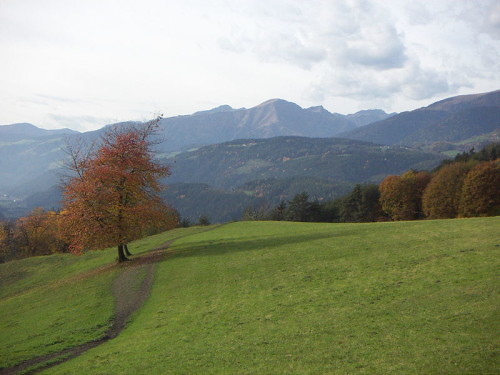
Prati in Pusteria, sopra a Chienes, Alto Adige, Italia. author: Luca Lorenzi

The Val Pusteria is a place-to-be for all the nature lover! It is bordered by the fantastic Parco Naturale di Fanes-Sennes-Braiesand and by the Parco Naturale delle Dolomiti di Sesto, which embraces some of the most famous Dolomite peaks like the Tre Cime di Lavaredo.

The valley’s main centre is Brunico: with a small population of 13, 700 inhabitants, the town is very lively.  A busy market town in such a wild area! Brunico’s tourist office (www.bruneck.com) open 9am-12.30pm and 3-6pm Mon-Fri (9am-12pm Sat) is the main contact point for the region. Zou can request here more detailed information on hotels and eating options in the town, but also in its surrounding villages and countryside.

Plan de corones

Plan de Corones are located just 4km south of Brunico, and offers a wide green and blue runs, ideal for beginners on ski. The ski-station, linked by cable car to Brunico, are part of the Dolomiti Superski pass. Gear can be hired in Brunico and Plan de Corones. Absolutely to visit and pretty easy to drive to from the Val Pusteria, here it comes the astounishing beauty of  Lago di Braies, a peaceful area. Alta Via No 1 starts here for all the trekkers and walking addicts. To get more easily to Parco Naturale di Fanes-Sennes-Braies, try from the Val Badia or from Passo Falzarego.

The other end of the valley overlooks the Austrian border and are the Sesto Dolomites, a pretty spectacular tracks.

Tre Cime di Lavaredo - Dreizinnen

The Valle Campo di Dentro is located near San Candido, while the Val Fiscalina is near Sesto. Lots of walking and cross-country skiing trails are to be tried here. From the Val Fiscalina izou can access the long but easy walk along trail No 102, up to to Rifugio Locatelli (2405 m.). Here you can rest and take a fab pic of the Tre Cime di Lavaredo. Around the Tre Cime the trails are easy enough for beginners and  families, and also very crowded in July and August. Possible also to rafting and mountain biking in the warmest season.

Taormina: the queen of Sicily

Greek Theatre CC BY-SA 2.0, Dennis Jarvis

Sicily is beautiful: let’s discover the Ionic coast between Taormina and Catania. A trip imbued of history and natural landscape, a unique, fascinating adventure in the warmth of Sicilian territory.

First start from Mazzarò, a famous beach in Taormina: here the cliffs falls into the sea literally. Then we can visit the Bella Island beach, between rocks and Mediterraneo’s flora.

Finally we arrive in Taormina, on the cliffs, dominating  a large bay with the famous Naxos gardens.

Taormina is indeed a very touristical city,  one of the most famous “riviera” in the world, and a holiday location for artists and writers at the end of the 1800. The genius of Goethe, the French writer Alexander Dumas, André Gide, Guy de Maupassant, famous painters such as Salvador Dalì, Paul Klee, Gustav Klimt, and British writers such as D.H. Lawrence and Oscar Wilde  were staying here!!!.

You will get lost around the Greek Theatre, and worth to visit are the Duomo, palazzo Corvaia, the palazzo dei Duchi of S. Stefano.

Cape Schisò closes the bay, and the landscape changes and opens up to Vulcan Etna.

From Taormina you can go and visit the East of Sicily: from the Acireale to the Eolie Islands, from the Mount Etna to the Gole dell’Alcantara, and of course Catania, Siracusa and Messina.

Caves alternates to little bays and dark volcanic sand with colourful cultivations of oranges and lemons and grapes: all of this will come along with you to Acireale. The town has been built on a lava terrace, 150 metres high over the sea:  it is famous for her thermal baths.

Leaving Acireale, we enter the Riviera of the Cyclops: small bays, rocks and indents make a fascinating way to follow. Omero wrote that Ulisse lands on an isle of the giant with one eye, the “Land of the Cyclops”, which Euripide found  here.


Eolie Islands: the divine beauty erupting

Eolie CC BY 2.0, Daniel Enchev

The vulcanic Eolie or Lipari Islands are one of the most enchanting and charming spots in Sicily. Turism here is huge in the summer, but in spite of all every single island keeps its own character: wild to explore and live or relaxing, mostly for young or mostly for the so called vip, full of calm beaches or imponent due to the vulcanic eruptions. Which have they in common? Of course the sea: the wild force of the tides can isolete the islands sometimes for days because of its high tides and deep waters.

The Eolie islands (ME) are north of Capo Milazzo, between Messina and Cefalù and they are connected all year to Milazzo and to Napoli by boat.

Lipari is the biggest island, with hot water sources which springs in many areas; to visit here the Norman cathedral and the Archeological Eoliano Museum. Amazing will be to go and enjoy the Belvedere Quattrocchi, at the Terme of San Calogero and the Acquacalda beach: this was the arrival point for ships coming to the island to load pumice stones.

Salina is peculiar as well: the 962 meters of Monte Fossa of Felci dominates the island, and its characteristic is the underbrush. on the Islands three towns are ready to welcome you: Santa Maria, Leni and Malfa.

Close by Salina, but going to the south, you will find Vulcano the island dedicated to Efesto, magnificent Greek god of the fire. The island has been descripted by Omero as home for the god of the winds, Eolo. Here there are three craters, two not active and one, the Gran Cratere, still active and alive: the last eruption was in 1890!.

On the same note, let’s meet an everlasting active vulcano, the one in the northwest of Stromboli! From Ginostra or from Piscitrà go to the old vulcanic Observatory and rise up to the highest crater: you will find a guide tour also at night when the spectacular eruptions are totally clear!

After all this exciting trip in the heart of vulcanos, keep on going and visiting the mundane Panarea, surrounded by high walls and really crowded. The last two of this seven sisters of the sicialian sea are Alicudi and Filicudi, the quietest islands, where to find peace and rest.


Other gems from Puglia: manors and castles

CC BY-SA 3.0, Freddyballo

The gems of Italy are its architectural imponent rocche, manors, castles spread a bit all over the place! Today we will go on tour inside Puglia, with its manors and castles overlooking the countryside or defending the sea from “li turchi”.

For example, Otranto is a lovely town on the east coast of the Salento Peninsula.

Otranto’s Castello Aragonese is exactly at the entrance to the town’s historic centre. The original castle was built before the 15th century, but in the Aragonese period it has been restructured. Nowadays it has been completely restored and open to tourists. Walk up to the top of the walls: a great view of the town and the sea is waiting for you! The first Gothic novel, the Castle of Otranto, written in 1764, has been inspired by this peculiar castle.

Another peculiar and charming castle is Castel Sant’Angelo, on the sea, located in the city of Taranto (located in the Puglia’s western coast). The King of Naples, Ferdinand of Aragon, built it in the fifteenth century. Originally it was acting as a main defensive system against water-based fights. The castle is currently a property of the Italian navy and you will not be able to visit the interior. The castle’s structure is pretty unique: the layout features large low turrets only slightly higher than the main castle walls.
Brindisi Castle is located on the opposite coast: commonly named as the “red castle” thanks to the color of the bricks, Brindisi castle shows two sections. The castle takes its starting point in 1227, during the reign of Emperor Frederick II. then it has been restored during the 15th century, but further extended during the 16th century.

During the Second World War, the castle became famous because it hosts King Victor Emanuel III while he was fleeing Rome.

The Val d’Orcia: a spectacular medieval landscapes nearby Siena

Going Tuscany: yes, well done, but what to see? Tuscany is so full of medieval and renessaince art not to mention the amazing landscape the hills offers to the astonished gazes of the visitors.

A little piece of advice? Start with the Val d’Orcia in the Southern part of Siena: the light fin the paintings of the 400 and 500’s is coming from this place, a real paradise on earth to discover through a lovely joblly trip!

The beauty that comes from some movies like “The English Patient” or “La vita è bella” comes from here! Rich architecture is the main charatheristic of Pienza and Montalcino with its fortresses, and worthy to visit are also the abbey of Sant’Antimo, the monastery of Sant’Anna in Camprena,the medioeval baths of Bagno Vignoni.

Going along you are going to meet the fascinating Radicofani and Rocca d’Orcia, and  the ‘grancia’ of Spedaletto.

Along beautiful and gentle hill, Val d’Orcia landscape are original and various, like the reserve “Lucciola Bella”, the famous white pines in Castiglione d’Orcia, and the pawerful calanques (calanchi), meaning the clay streets surrounded with cypresses and white streets which runs amongst farms, agriturismi and antique monasteries. Val d’orcia’s landscape is the expression of an ancient nature.

Five communities (Castiglione d’Orcia, Montalcino, Pienza, Radicofani and San Quirico d’Orcia) are created the Cultural, Artistic and Nature Park. 

The best things to eat? Simply yet incredible flavour in Val d’Orcia. The best and recommended choices are pecorino cheese, wine, oil, honey and saffron.

The viticultural tradition in the region around Siena dates back to the Etruscan times: 2500 years of grapes on hills with their characteristic wavy and soft shapes. Sangiovese, a native and famous variety of wine, and other fab varieties such as Canaiolo, Tuscan Trebbiano, Malvasia or Bianca lunga, Vernaccia and Ansonica. But the king here is Chianti, one of the first wines to be appreciated in America!

In Val d’Orcia you have to drink Moscadello di Montalcino and the Rosso di Montalcino: unforgotable!!!