Imola and its marvellous spirit

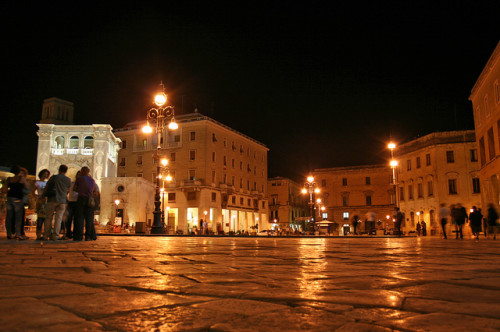
iazza Matteotti – Imola CC BY-NC 2.0, Alberto1x3

Imola and its surrounding places are little known and little affected by the large flow of tourists, yet offer a unique scenario of art and culture.
D
espite officially belong to the province of Bologna, Imola considers itself as belonging to Romagna in all respects. This apparent oddity dates back to the Middle Ages, when Imola sided with the nearby Bologna and  Forli against the powerful Signori, but the link between the two cities was strengthened even more when the Sforza made Imola their own possession together with Forli. By that time important examples remain such as the Cathedral of the twelfth century, the Renaissance palaces and Bersanti Della Volpe, the monumental thirteenth century building later expanded by the Sforza into the famous Castle in the fourteenth century ; now it houses a fine collection of antique weapons and medieval ceramics and pottery. A short distance from the city centre, it is the circuit where runs the San Marino  Formula One Grand Prix.


Location
The town of Imola is perfect for a visit at any time of year, thanks to a mild climate and the enviable location. On the banks of the river Santerno, where the Tuscan-Romagnolo Apennines meets the Po Valley, Imola enjoys a privileged location. Just 30 km from Bologna and 60 km from the sunny beaches of the Adriatic coast. Known throughout the world for its historic racetrack, Imola is the perfect place to spend a few days in culture and sports, not to mention a few stops dedicated to the tasty food and cousine. The elegant palaces and the Sforza castle are just a few of the jewels of the city centre, full of pedestrian area, while the picturesque setting of the Apennines and the sports facilities  make the city suitable for nature lovers and sports aficionados. For cycling enthusiasts the Valley of Santerno
and Val Sellustra offer landscapes of great beauty. Located 15 km away, there are the castle of San Piero in Bagno.


Highlights
The Sforza Castle built in the thirteenth century is undoubtedly the building that stands out most in the landscape of the town. The complex, internally open, houses a rare collection of ancient weapons and a prestigious exhibition of medieval pottery. From the beautiful walkways you can also admire the territory of Imola, ranging from the nearby plain to the ApenninesThe fortress, which dates back to 1261, is one of the finest examples of Renaissance building in the region EmiliaRomagna. There are many  masterpieces that welcomed the guests: Niccolo Machiavelli, Caterina Sforza, Cesare Borgia, Leonardo da Vinci. The latter, from the top of the castle’s towers, designed in 1502 the plant of Imola, now kept in the Royal Library in London.
Among the innumerable palaces scattered throughout the city centre, many of which are accessible to the public, stands out for its beautiful furnishings and the perfect state of preservation Palazzo Tozzoni. Particularly striking are the cellars of the house you will find a rich collection of great historical instruments and tools of local rural.

Surrounded by beautiful gardens, the San Domenico Museum, located in the cloister of the monastery of St. Nicholas and Dominic, next to the homonymous church, houses the Art Gallery and the Museum Joseph Scarabelli-Section Archaeology. The picture gallery of the gallery includes important paintings from various periods and schools among which works by Innocenzo da Imola, Bartolomeo Cesi, Guttuso and de Pisis. Also the Pharmacy of the hospital, a building opened in 1794 and remained largely intact in the furnishings and decorations, gives the visitor a fascinating picture of an eighteenth-century pharmacy, enriched with decorations from the large vaulted ceiling frescoes and vases 457 vintage tiled display of carved wooden furniture.

At the foot of the hill it is instead the ride path that has made it famous Imola worldwide. The Enzo e Dino Ferrari circuit, built in the early 50’s, still hosts sporting events of international importance and is a must for anyone who wants to fully understand the nature of the city of Imola.


Imola boasts many lovely pasta types: garganelli, Strozzapreti and tortelloni stuffed with ricotta and herbs, but also
roasted and grilled meats. Then there are the famous piadina to match with soft cheeses and fine meats. When it comes to wine, the selection is extensive: among the red, try the Sangiovese DOC and DOCG –  among whites we advice Albana. The Road of Wine and Flavours Colli d’Imola speaks for itsself!
Surroundings

Another Rocca to visit nearby is Dozza’s, one of the “Most Beautiful Villages of Italy” . It is an artifact of medieval origin transformed by Caterina Sforza and turned into a fortified castle, during the Renaissance. The complex looks like an house-museum which offers three routes: the medieval fortress and Renaissance, Residence Renaissance, Residence eighteenth century. The valuable collection of paintings, furniture and historic objects Malvezzi-Campeggi animate the nine rooms on the main floor and the historic kitchen. The museum also includes collections of contemporary art collections..
In Dozza takes place Biennale del Muro Dipinto
(Biennial Exhibition of the Painted Wall), for almost half a century, evidence of the artistic vocation of this small  medievale village.

Located 15 km away, in Borgo Tossignano, the Parco regionale Vena del Gesso (Regional Park of the Chalk Vein) hosts a spectacular, almost lunar natural wall, full of caves, tunnels and beautiful walkways. The chain of selenite gypsum long ten miles regally overlooks the valley of Santerno offering breathtaking scenery. In Tossignano there is also the Visitor Centre  preserving specimens of chalk and limestone and is home to the museum of material culture. It also offers the opportunity to conduct educational workshops on nature and the environment.


Having fun in Imola

Imola Music, in June, offers cultural events and performances by artists in the streets of the old town. In September, the city also confirms its vocation as the Land of Engines with CRAME, the trade show for cars, motorbikes and vintage bikes, and the Superbike World Championship for bikes derived series, both Autodromo Enzo e Dino Ferrari. In November, the Bacchanal proposes exhibitions, theatre performances, conferences, markets and tastings throughout the city.

The secrets of Ravenna

Piazza del Popolo CC BY-NC-ND 2.0, Giovani Racca

Ravenna one of the candidate cities for the title of European Capital of Culture for the year 2019, is a town that has so much history and so much art to be discovered, as it is a city that reveals its secrets gradually. Only a careful examination may lead to the discovery of treasures that are truly unique, and not just in Europe.

Historical background
Ravenna, probably inhabited by the Umbrians and Etruscans later, starts its records from the second century BC, when much of the Po Valley was colonized by Rome and, consequently, Ravenna became a Roman city.
In the first century Caesar Augustus chose Ravenna as the headquarters of the fleet in the eastern Mediterranean. He built the great Port of Classe.
The most important period of the history of Ravenna began in 402, when it became the capital of the west. Honorius moved his court to Ravenna and in 476 the Roman Empire in the west end and the barbarian king Odoacer assumed the title of King of Italy and Ravenna again were chosen as the venue.
Ravenna in 493 was occupied by Theodoric, who, for more than 30 years, ruled the city with wisdom; he restored the aqueduct of Trajan and undertook great works of reclamation.
Because of the Arian cult, he built churches for its population (the present Church of the Holy Spirit, near the Baptistery of the Arians and the Church of S. Apollinare Nuovo). In 540 Ravenna became Byzantine when the army commanded by Belisarius entered the city, which,  under the influence of Justinian experienced a new period of great splendour.
Followed centuries of ups and downs, the struggles between the feudal period, the domain of the archbishops, the erection of a free commune, the power of the various Lordships. In 1431 the city was under the rule of the Republic of Venice until the beginning of 1500, when the whole Romagna became part of the Papal Government and Ravenna was reduced to the status of an outlying village, devoid of their own culture.

Highlights
Only in recent years there has been a turnaround: the factories have been developed, the art has regained force and especially the mosaics are back to being the pride of the city, known throughout the world thanks to them.

Piazza del Popolo 0 is the heart of the city and it was built by the Venetians about 150. From the small station, walking  straight down Viale Farini to Piazza del Popolo. Most sights are within a few minutes’ walk of Piazza del Popolo.
The Mausoleum, definitely wanted by the same Theodoric in 520, was built in the place formerly used at the cemetery of the Goths. It is built with large blocks of Istrian stone, squared and well-connected securely to dry, but bound inside by iron clamps. The side is marked by impressive round-arched niches and proportions and shape. Through a niche you go that leads inside a room in the shape of a cross, illuminated slightly by 6 windows, perhaps a chapel to conduct the funeral service or a burial chamber where the sarcophagus would have to take place for the family.
The upper floor is always smaller decagonal niches repeated emphasis on the reason of the porch; above the door is a circular shape, starting with a marble frame ends with an ornamental leaves whose remarkable frieze is called the “pincer”. The Battistero degli Ortodossi was built in the late fourth to early fifth centuries and is the oldest of Ravenna’s monument with many incredible mosaics which decorate the dome.

Ravenna is also the city where the remains of the Italian poet Dante. He is a dedicated area of ​​the city, just call Dante area, rearranged in the years 1933 – 1936. It includes a complex of interesting monuments, made even more famous by the presence of the remains of Dante, who was buried under a porch outside of the nearby church of St. Francis. Only in 1483, Bernardo Bembo, captain and mayor of Ravenna  commissioned Pietro Lombardo to beautify the tomb. The current temple in sober neoclassical style is the Cardinal Legate Luigi Valenti Gonzaga’s desire, who entrusted the work to the architect Camillo Morigia in 1780. The interior is well covered in marble and keeps the urn with the bones of Dante, had it made in 1483 by Bernardo Bembo.
Not far from the tomb, stands the Museum of Dante. It is accessed by an external staircase in the back of the tomb. It was settled in 1921, when it was donated by the municipalities of Italy also the bell placed over the outside staircase.

Ravenna’s two most important sights, Basilica di San Vitale and the Mausoleum of Galla Placidia, are two blocks away down Via San Vitale. The Mausoleum of Galla Placidia, is just across the courtyard from the basilica. A  little mausoleum but with the oldest  mosaics in Ravenna: Jesus the Good Shepherd, Mark’s lion, Luke’s ox, John’s eagle, the golden cross are tresures from a early Christian era. The Basilica di San Vitale is one of Italy’s most important monuments of early Christian art with an elegant cupola and stunning 6th century mosaics in its apse:  the scenes of apostles, the lamb on the twinkly ceiling, the beardless Christ, and Emperor Justinian and his wife Theodora. The Basilica di Sant’Apollinare Nuovo was originally a Palatine church. Byzantine style mosaics cover two walls reflecting both early-Catholic and Arian cult beliefs.

Interesting and suggestive is the church of San Francesco, whose crypt is often filled with sea water, being below sea level, it is not difficult to find even small fish that live permanently or4mai here, between the columns and the floor.Absolutely unmissable is the M.A.R., the Municipal Art Museum of Ravenna, which  includes a collection of contemporary mosaics, medieval and modern art, and temporary art exhibits.

The Basilica of Sant’Appolinare in Classe,  outside Ravenna and located  in the ancient Roman port of Classe is nearby the archaeological park. Its apse is decorated with mosaics and it holds the sarcophagi of former archbishops.

Ravenna is only  90 minute  from the main Venice–Florence train trail and  close to Bologna. So it is worthy a visit, also to taste its unforgettable piadina!

Riccione: very modern beach resorts in Romagna

scivolo

Riccione and its beach: in summertime it shows a perfect organization and an impeccable professionalism of its staff which are renowned for one of the cities of the Riviera‘s most famous in the world for its warm welcome.
Also visit the baths of Riccione to relax and improve your health!
There are some interesting opportunities in this town of Romagna for the tourism trade fair: the Palazzo dei Congressi in Riccione is a conference facilities at the highest level for efficiency, professionalism and hospitality, with many  offers associated with business, well-beings and tourism related topics.
The Palazzo del Turismo is also located in the centre of Riccione, close to Viale Dante and Viale Ceccarini and the Palazzo dei Congressi. The facility can accommodate exhibitions and events, and it is home to the tourist information offices and tourism Office in Riccione.

The heart of the entertainment in the town is to dance, play or dine with your partner on the beach. You go to Marano di Riccione, in the northern outskirts,  rediscovered  a few years ago by the many trendy bars sprung up directly on the beach. You will expect to plunge in a Brasil-like atmosphere: mostly open during the summer, during the day the beaches closeby are equipped with whirlpool and games for children.
On the square the Rain Forest” fountain designed by Tonino Guerra is known by all the locals and also by the visitors. In summer in that square Radio DJ will be broadcasting live from Riccione. At Christmas time, a skating rink on ice will be set up, during  while New Year’s Eve Piazza Roma is the main focus for watching concertsand fireworks. The old part of the city is also crossed by a train that goes to Riccione in the summer, while in winter you will be invited from Riccione to the country-like Ciocopaese”, a food and wine event that for years was the home to all kinds of chocolate prepared by master chocolatiers. Riccione since 2008 and offers wine and chocolate together. A bonus for foodies!!
On the whole the town is also very famous for engaging a solid base of various kind of accommodation and thousands of last minute offers, which make here very affordable am accommodation and make the tourism industry flourish . The Adriatic Coast in Riccione is at its best in the field of access to innovation and to the many services: hundreds of residences and hotels, great rooms and great hospitality. The Green Pearl of the Adriatic awaits your visit!

The landscape  and the beaches

The landscape of the Adriatic coast is really nice: the beach bordered by pine forest that is produced in a wide embrace for the entire coastal part, the beautiful hills behind the beaches and within walking distance from the beach, the sea and the green which is distributed around Riccione.
The new boardwalk was opened in May 2008 for the town  and it is completely pedestrian with access also for bike, green areas and benches, water fountains and traffic strictly prohibited.
And if you have a car? Do not worry, you will have  for you an underground parking! Worth a visit to the amusement parks in Riccione: the gigantic slides of Aquafan, the “travelinside the sea and on the planet Earth that will  takeyou on a great adventure in the theme parks. Also the live performances of the most amazing and spectacular kind on the wide screen of 600 square meters of the IMAX theatre will not disappoint you and your family.


The beach and the reception  team up to offer the best of the hospitality in the Adriatic coast, and  great seaside villages seamlessly monitored thanks to its famous and experienced lifeguards.

Many tourists of all nationalities love to come in Riccione. A flourish of cabins, deck chairs and umbrellas next to resort and a networks for traditional beachsports in many beach in the Riviera are  included in the experience, topped with an excellent organization and also equipped gyms,  alternate pools with Jacuzzi and relaxation area.
In Riccione promenade, in Viale Ceccarini, a stroll is mandatory: every night you can join a different venue between appetizers and music, laughter and flirt! In the disco you pass unforgettable hours that punctuate and articulate fantastic nights spent dancing both in the summer and winter clubs. They are glowing worlds that throb a fast-paced and fascinating music, mixed by the best international DJs.

The Romagna is home of Liscio in the balera, venue celebrating this kind of music.Recently the Latin American dances last cry churn out every year or it will come back into fashion some ancient ones, such as salsa and tango. The body dances in the sun or under an umbrella or in the temples of modern music in Riccione!

Hinterland and excursions


Riccione also offers itineraries inside its beautiful and picturesque hinterland. The locations you can drive to are full of ecstatic landscapes, castles and palaces flourished in medieval and Renaissance history under the aegis of Malatesta. You will have at hands a rich calendar of events, including folklore, festivals and celebrations.

Just 8 km from Riccione you will find Coriano, situated between old farms, vineyards and olive groves where you can walk in the Park Marano River and the Valley of the Rio Melo to be enjoyed also in the autumn with the Feast of the Olives and Sangiovese.
Gradara is 14 km away: here we revisit the story of Paolo and Francesca, and if you are going to see the Rocca in the third weekend of July, do not miss the charming medieval re-enactment Seduction at the Castle.” Then in regard to the cousine, you will taste typical gradarese, the bigol, a special handmade noodles topped with porcini mushrooms or meat sauce. Also at approximately 14 km away there is Morciano di Romagna that offers the Fair of St. Gregory, March 12, specializing in sheep, cattle and thoroughbred horses.
Twenty miles away comes Gemmano the door to visit the valley of the Conca with the Caves of Onferno and its choice food and wine made ​​from Sangiovese and Trebbiano and roast meat. It is located approximately 20 km from Riccione also Montefiore Conca and a beautiful and imposing Malatesta fortress. In July, the cultural festival Rocca di Luna and the Well-beingFair, while in October the Chestnut Festival. By eating the delicious passatelli here are in stock, and in autumn chestnuts sprinkled with wine.
Also nearby Montecolombo and its famous castle of the XI century.
Stunning is Mondaino and its Piazza Maggiore with a circular structure and a neo-classical portico. In July, you will have fun and eat greedily during the famous Festival of Tripe and Strozzaprete, while beautiful is also the Palio del Daino (3rd week of August) with its atmosphere which reproduce the accurate and precise medieval environments. Enjoy the nettle and ricotta ravioli and roast in plum sauce.
After sixty kilometres is then Casteldelci, rich in perennial springs, the height in the Middle Ages, with the establishment of fortresses and castles. From the Ponte Vecchio you can see the towers of Gattara, the tower del Monte and the Bell. The hotels and hotels where you are going to stay in Riccione offer for sure brochures with the many possible routes and directions on how to get there!

Amalfi in the amazing Costiera Amalfitana

Amalfi CC BY 2.0, Alpha 350

The Costiera Amalfitana for its fertility and the amenity of the coast of its own sea and the fruitfulness of his fields of earth, is well-known ad well as for its historical and artistic beauty, natural wonders and culinary traditions. Indeed Campania and its Costiera Amalfitana is still one of the most beautiful area of Italy. Thousands of tourists from every corner of the world each summer hit the streets of Amalfi, Positano, Vietri sul Mare  in search of the attractions that have made this region one of the most recounted by poets and writers. The small town of Campania are able to engage all of your senses, giving you a memorable holiday. We will discover the splendid town of Amalfi, beloved among Brits and Americans mostly.

The town keeps its sense of marvellous stemming from the scent of the sea and the noble heritage of its seafarer Republic, who once fought against the like of Pisa, Genoa, Venice. The tourist flow reaches its peak in July-August, so it will be better to travel in the area either May-June or September, when it is less crowded and to take a bus on time is not being on a mission.

Declared a UNESCO World Heritage Site, one of the most celebrated natural wonder of the world,  the Amalfi coast  is one of the jewels of Campania in the province of Salerno. This area of ​​natural and artistic beauty goes from Positano to Vietri sul Mare, and welcomes, throughout the year, tourists of all the planet. So as the name suggests, the Amalfi Coast in Amalfi has one of its most important locations. If you have decided to come on vacation in a tourist paradise, Amalfi is really the right place where you can combine art, culture, sea, good fish and relaxation.

Founded  in the ninth century by the Romans, Amalfi became famous all over the world when it developed the maritime trade in the Mediterranean. His fame was outstanding when it became one of the four Maritime Republics. Amalfi, nowadays, has become a prestigious holiday destination and his reputation remained intact. From here you can reach other pearls of the Amalfi Coast in a few minutes such as Minori, Maiori or Cetara. Indeed Maiori and Minori are close such a beautiful nature and unique natural feature as the Fjord of Furore. You can reach it via bus or via 1200 stairs from the tiny village of Furore. Here the view is breathtaking: actually this is the only example of fjord formation in Italy!

The presence of landscapes of indescribable beauty and the immense historical and artistic heritage.  The town centre is quite small, and you’ll have no problem finding a hotel with a sea view, or just a short distance from the most important attractions such as the St. Andrew’s Cathedral, symbol of the entire coastline. Of ancient origins, the cathedral of Amalfi was built and rebuilt, following different styles: Romanesque, Baroque, Rococo and neo-Moorish. You can access the interior through a magnificent bronze portal, which is located on top of a spectacular staircase. The interior, dating mainly to the Middle Ages, it is very impressive. Among the works preserved here, you can admire the frescoes of the thirteenth century and Roman sarcophagi. Inside the crypt, accessible via a side door, you can enjoy an important relic of St. Andrew, patron saint of the town of Amalfi. Quite charming is the  Chiostro del Paradiso (“Cloister of Paradise”) built by Filippo Augustariccio between 1266 and 1268 and a burial cloister for noble families of Amalfi.  It is a  open-air museum, with Roman and medieval pillars and sarcophagi.

Near the cathedral are also several features shops where you can buy local products and nice souvenirs. Not far away are also the Museo della Cartiera, Inside it, there is the opportunity  to see all the old technologies for the production of paper (pile hammers, Dutch machine, paper machine in plan) that have been restored and made functional again. In fact it is a museum that is situated within a paper mill and traces the process of the ancient and famous paper “Wadding” of Amalfi. Fun also to visit the Civic Museum, the Museum of the Compass and the Duchy fishing.

At the foot of the staircase are some of the most renowned restaurants and pastry shops of Amalfi to taste sweet and delicious dishes of the local tradition. Gastronomic symbol of the town is the lemon, also known by the name of “sfusato Amalfi” used especially for the preparation of limoncello liqueur, typical product of these areas.

It’s nice and interesting to discover this small town during its typical festivals. Important is the festival dedicated to the Patron Saint Andrew, patron of fishermen and fishmongers. The celebrations in the coastal is on at the end of June and more specifically 25 to 27 June. According to the legend, in 1544 the saint unleashed a storm to prevent the terrible Saracen pirate Kair-Ad-Din conquered the city. This festival  culminates  by a procession around the country. The statue of the saint is carried up the beach and then be delivered to the fishermen who bring it to ride to the Duomo climbing the stairs for  a show not to be missed. The evening ended with beautiful fireworks.

Another wonderful event is the Historical Regatta of the Maritime Republics. An event that involves the town of Amalfi, Pisa, Genoa and Venice, taking turns to host the regatta. Every four years, on a day in the period from May to July, Amalfi is animated by a “medieval” spirit . The sports competition evokes the ancient (and dusted)  rivalry  of the four cities. Eight rowers on the galleons depart from Cape Vettica and arriving at Marina Grande for  a distance of approximately two kilometers. The regatta is preceded by a procession of figures in historical costume.

But the true wonder of Amalfi is the sea. Near the bus stop, a short walk from the Cathedral, you will find a small beach lapped by crystal clear waters, where you can relax and enjoy the natural beauty of this unique place in the world.

Lecce is ready to be discovered

Where are you going for your summer vacation? Still have no ideas?

Well, if you’re looking for some inspiration you should read this article…. Maybe Lecce could be your next ideal destination!
Situated in Apulia, a beautiful region in Southern Italy, Lecce is rich in fantastic places touched by a crystalline sea that transmits a true joie de vivre.
Let’s start the discovery of this amazing city situated in the heart of Salento (here a useful infographic about the region), a city known as “the Florence of the South” or as the “Lady of the Baroque“. Lecce is in fact characterized by the Baroque art that impresses visitors thanks to the pietra leccese, the local stone used in many churches, monuments and historic houses of the old town centre.
Here is a list of the most important historic and artistic sites to visit, as well as the things you absolutely have to buy, eat and drink if you want to say “yes, I’m really in Lecce!”
So…Ready… Steady… Go!

Saint Orontius Square in Lecce

Saint Orontius Square in Lecce
Saint Orontius Square in Lecce Photo CC by Shaun Merritt

Following Corso Vittorio Emanuele, you can reach Piazza Sant’Oronzo. It’s the main square of Lecce and it’s considered the heart of the city life thanks to its numerous cafés, shops and offices. Characterized by the mosaic pavement, where is represented the emblem of the city, the square is composed by different buildings erected between the middle ages and the nineteenth century. Even if each building has its own architectural style, they coexist harmoniously.
Since 1656 the square is dedicated to Saint Orontius (Sant’Oronzo in Italian), the patron saint of the city. It’s for this reason that in the middle of the square there’s the statue of the Saint in the act of blessing the city.

The Cathedral of Lecce

Cathedral
Lecce Cathedral and Piazza del Duomo -Photo CC BY-SA 3.0 By tango7174

The Cathedral of Lecce is located in the homonymous square and represents the core of the city’s religious life . The Cathedral was first built in 1144, with repairs carried out in 1230 and it’s dedicated to the Assumption of the Saint Virgin Mary. In 1659, it was completely rebuilt by the architect Giuseppe Zimbalo at the behest of Bishop Luigi Pappacoda, whose remains are preserved in the altar dedicated to Saint Orontius.
From the architectural point of view, the Cathedral has two entrances, the main one on the left side and the other one overlooking the entrance to the square. The main façade is sober and elegant, in spite of the secondary portal that represents one of Lecce masterpieces of Baroque art, with the statue of Saint Orontius between the two statues of Saint Justus and Saint Fortunatus.
The Cathedral is built on a Latin cross plan, with three naves separated by columns and semi-columns. The central nave and the transept are covered by a wooden ceiling: here you can admire the painting representing the Martyrdom of Saint Orontius and the Last Supper. The Cathedral holds art works of important artists and twelve altars.
Among the other monuments that enhance the beauty of the square there are the highest belfry of Italy, the bishop’s palace and the seminary. The Cathedral is the seat of the Archbishop of Lecce.

The Castle of Charles V

The Castle of Charles V
The Castle of Charles V – Public Domain Photo

In the nearby of Sant’Oronzo Square is situated the Castle of Charles V, built by King Charles V in 1539. The building was designed by the architect Gian Giacomo dell’Acaya and required the demolition of the Chapel of the Trinity and the Monastery of the Benedictine Order of the Saint Cross. After having been used as military barracks and district from 1870 to 1979, today the castle is owned by the Municipality of Lecce and it’s seat of the Cultural Affairs: the castle is a perfect scenography for various cultural activities and host theatrical productions.
Visitors will be surely charmed by the refined decoration of the interiors: the capitals and the big room are decorated with impressive stained glass windows. Maybe you don’t know that a curious legend is linked to the history of the castle: it seems in fact that in the 14th century the owner of the castle, the family Balzo Orsini, kept a white bear in the moat of the building. The animal was a status symbol, and it was used to scare prowlers.

Useful information:
Free entrance from 9.30 am to 6 pm
Address: Via XXV luglio, near Piazza Sant’Oronzo

The Roman Amphitheatre of Lecce

Roman Amphitheatre
Roman Amphitheatre – Photo CC by zobl_vie

Situated near Saint Orontius Square, the Amphitheater of Lecce was built in the 2nd century BC and it is a relevant testimony of the Roman period. The building was completely buried by rubble following earthquakes and ravages and only at the end of World War II, thanks to some excavations, was unearthed. The visible building is now just a third of the entire structure that is probably still submerged in the subsoil of the Piazza Sant’Oronzo. The Amphitheatre was built with travertine pillars topped by an arched architecture and it was able to seat more than 25,000 people. Among the sculptural works of particular interest that have been recovered, there’s the statue of the goddess Athena that is now displayed at the Museo Castromediano. The Amphitheatre of Lecce is currently used for religious and art events.

Useful information:
You can visit the Roman Amphitheatre in April, May and September from 10:30 am to 12:00 am and from 5:00 pm to 7:00 pm.
From June to August, entrance is allowed from 6:00 pm to 8:00 pm.
In addition, during the closing period you can visit it by appointment.

Where to sleep

You can choose among a wide range of accommodation in Lecce: hotels, bed and breakfasts, farmhouses and rooms. It’s up to you, it depends on your budget! You can choose if you want to sleep surrounded by the artistic attractions of the city spending a little more or if you prefer less central but cheaper areas , like the one near the station. In the province of Lecce, there is also the possibility to sleep in beautiful holiday cottages.

What to buy: the ancient handicraft tradition of Lecce

Lecce has an ancient tradition of craftsmanship that it’s still alive. People can find various items in the typical shops of the old town, but I suggest you to visit one of the local permanent exhibitions where you can discover the historic artisan tradition not only of Lecce, but also of the entire Salento.
Wrought iron, copper, terracotta, cane are all simple materials which are incredibly used to create common objects for the daily life, as well as creations that are considered by some truly little works of art. Every last Sunday of the month, however, in Piazza Libertini you can find a picturesque antique market: hundreds of stalls where you can find pottery and artifacts of ancient tradition.

In particular, Lecce is known for two handicraft activities: the papier-mâché and the working of the local stone.
The tradition of the papier-mâché is closely linked to the Church, as these production techniques have been used in the past to strengthen the local religious sentiment. In fact, these techniques are usually required for the reproduction of statues and holy figures.
Regarding the local stones, however, its accurate production is easily visible on the façades of churches and local palaces. The pietra leccese, the stones of Lecce, is still worked by the masons that create original forms still linked to the local tradition. For their knowledge, the mason can be considered true artists-artisans.

Food and wine of Lecce: what to eat and drink

The cuisine is characterized by the use of simple ingredients as refined flour or barley, vegetables that are both wild (wild chicory, dandelion, wild asparagus, etc) and cultivated (cabbage, tomatoes, peppers, eggplants, beans, turnip greens, etc), olive oil and Mediterranean spices  for example sage, mint, oregano, rosemary, marjoram which can really enhance the flavour of each dish.
Among the typical dishes you absolutely have to taste in Lecce, I strongly recommend you try:

  • the rustico leccese, a dish composed by two discs of puff pastry stuffed with mozzarella cheese, béchamel, tomato, pepper and nutmeg;
  • the puccia, a durum wheat bread round shaped that needs to be filled;
  • the orecchiette, a kind of home-made pasta typical of the Apulia region whose name comes from its shape, which resembles a small ear.

As for desserts, they are all delicious and they are mainly made with ingredients such as almonds, honey and cinnamon that are typical in the Eastern world. Apart from the famous pasticciotto leccese, a cake made with puff pastry and custard which must be eaten hot, there is an infinity of delights prepared with almond paste that you have to taste in Lecce.
Concerning the choice of wines to drink, you are strongly advised to try NegramaroSalice Salentino , Primitivo di Manduria, the Malvasia, Matino, just to mention some local wines characterized by the richness of colour and flavour. All these wines are simply divine!

So… What are you waiting for? Prepare your luggage because Lecce is ready to warmly welcome you!


A Selection of 5 of the Most Beautiful Wedding Destinations and Wedding Photos

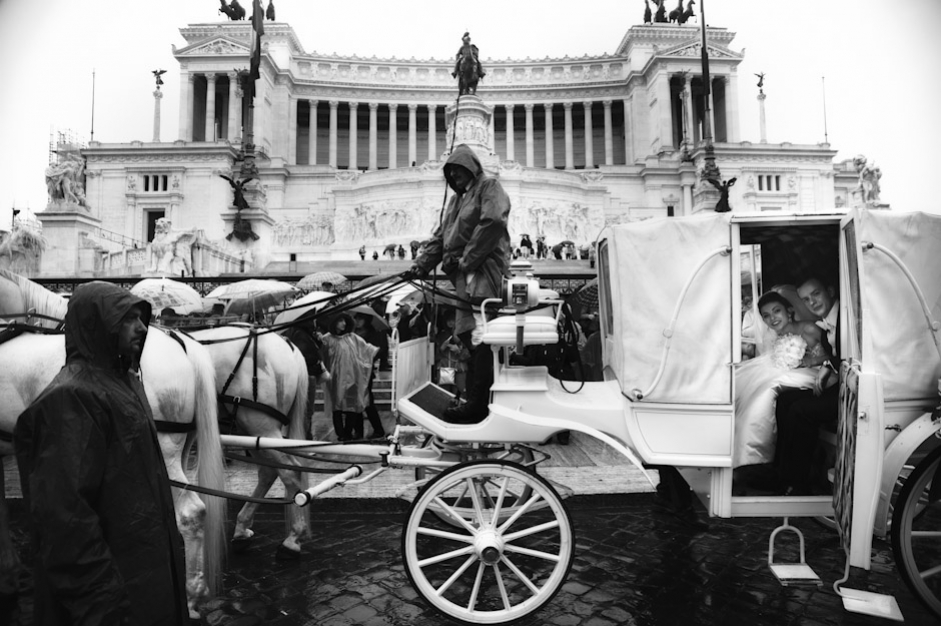
Certainly Italy is one of the most romantic countries in the world. Its unique atmosphere, the passion of the people and last, but definitely not least, is the stunning variety of unique cities and landscapes. All breathtakingly beautiful, yet so different from one and other. This is what makes Italy a place as no other and a primary destination for weddings from all over the world. We would like to take you on a trip through a selection of 5 beautiful wedding locations in Italy, accompanied by some of the most amazing wedding photos by Carlo Carletti. Our trip starts in the eternal city of Rome, very few other cities in the world can boast so much history, artistic and architectural beauty all in one place. The city transmits fantastic energy and liveliness, a charming place to be, a great location for a wedding and a superb background to an unforgettable day.

By Carlo Carletti
Photo by Carlo Carletti Wedding Photographer

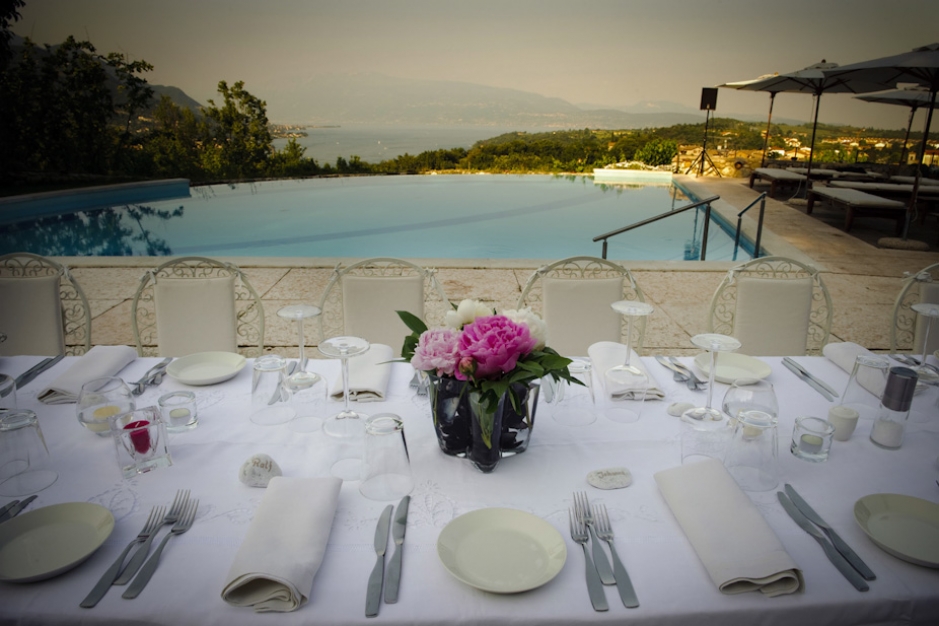
Our next stop, not as popular among the wedding destinations, but not for this any less beautiful than the previous, is Lake Garda. Its peaceful shores are home to many stunning villas, which, especially in the summer time during clear days, offer phenomenal views of the Alps in the distance on the far side of the lake. This truly is a fairytale place to celebrate the most important day of your life.

Photo by Carlo Carletti
Photo by Carlo Carletti Wedding Photographer

Let’s call the next destination Lake Garda’s more popular brother, Lake Como. Famous not only for the many celebrity appearances but also for landscapes of unique beauty, its villages are will surprise you with their unbeatable charm and atmosphere.

Photo by Carlo Carletti
Photo by Carlo Carletti Wedding Photographer

Let’s head to southern Italy now, in what is certainly one of the most amazing and beautiful places not only in Italy, but worldwide: Positano and the Amalfi Coast. Its characteristic colourful houses, its beaches and the breathtaking views of the coastline and the sunsets over the sea make of it one of the most romantic places to be. With many venues to choose from you definitely will find the one to satisfy your needs and preferences becoming the background to the wedding you have always dreamt of.

Photo by Carlo Carletti Wedding Photographer

The last stop of our tour is a classic wedding location, its charm is one of a kind, and never fails to create the perfect ambiance in which to celebrate a fantastic wedding. The many ideal locations the city offers for a wedding are all characteristic in their own way, offer different perspectives of the city but all breathtakingly beautiful offering many opportunities for superb wedding photos along with a memorable ceremony.

Photo by Carlo Carletti Wedding Photographer

Credits: All Photos by Carlo Carletti click to learn more.

Faboulous beaches and food: welcome to Puglia

CC BY 3.0, Link

Travelling around the beautiful Puglia, the tourist can have many epiphanies: firstly, the beaches. From a rocky landscape to a smooth Maldive-like sand and natural reserves which include super beaches. Here a portrait of some beaches in the Lecce and Taranto areas, among which we start describing our personal beloved spot, Gallipoli.

Punto del Pizzo with its spike marks the starting of the beautiful and spectacular Gulf of Gallipoli, Lecce.Here it is difficult not to lay under the sun among lovely sandy beaches entered through fragrant pine woods which provide a refreshing shade for the international and local crowd.

The historic fortress island town of Gallipoli is unmissable if you’re in the area of Lecce and from this point on over 100km of coastline is to discover!

A few kilometres up you can find Rivabella, the little Caribbean seashore of the South: sandy beaches and fun in the numerous bar spread on the cost and on the sea-front! Stretchin right up to reach Taranto, interesting and clean low-lying rocky coastline mingled with the usual sandy beach, including the costaline of San Caterina di Nardó.

The sandy sea-front of Porto Cesareo is waiting for you, closed by its own promontory and overlooked by the Isola dei Conigli. About 20  kilometres more of untamed beaches between Punto Prosciutto to Acqua Dolce stretches along the south coast below Manduria region, which is also worthy to visit!

Following the road and heading north-west, you will reach the port of Taranto and the nearby towns with their own sandy bays. On the other side of Taranto, the coast goes west; following  the northern shores of the Gulf of Taranto, after 40km the Stornara Nature Reserve opens up full of sand.

A fantastic trip is waiting for all of you, indeed refreshing in the hot summer and equally interesting in spring time.

Discovering the Italian parks: Parco Naturale della Maremma in Tuscany

CC BY 2.0, Visit Tuscany

Tired of the same old same old in Tuscany yet astoninshing beauty of the towns? Discover the “secret seashore” hidden in the area of  Tuscany  called Parco della Maremma: it is a fantastic trip to be made when you  are in one of the most beautiful Italian areas.

Located between Monti dell’Uccellina and the pine wood of Marina di Alberese, limited by the mouth of the river Ombrone and the Trappola marshes, here a diversity of ecosystems co-exists since 1975 : The Natural Park of Maremma has been created to protect the flora and the fauna but also to fascinate the visitors.

The Mounts of the Uccellina dominate the central and southern part of the Park:  the highest mount is Poggio Lecci, 417 metres and the calcarous and silica hills are almost completely covered by thick vegetation. The lower part  is now utilised for grazing and olive groves.

In the Monti of the Uccellina there are towers and religeous buildings:  the ruins of the Abbey of San Rabano, the spiky towers of Castelmarino, Collelungo, Cala di Forno and the Bella Marsilia.

To the left of the mouth of the Ombrone there is a compact set of dunes covered for the main part by a pine wood. Boar and deer, but also porcupines, wild foxes, beech martens are some of the fauna spread all over in the park. To discover the beauty of this area, you can follow a number of different routes, asking or following the Park Rangers. The area also offers many different places you can spend the night.

North of Ombrone the flat lands are characterized by the Trappola marshes:  mirrors of water, called “chiari” or “bozzi”, can be  temporary and permanent. Here one can often see the Maremmani cows that live in the wild all year round drinking and resting. The ponds are home for a large number of immagratory birds in the winter, too.

Parco delle Madonie: alternative routes inside Sicily

Paco_delle_Madonie_080

Looking for a slightly alternative Sicily which still has to be written about? Parco Naturale Regionale Delle Madonie in Sicily, welcomes the visitor with its 40,000-hectare  of forests which include the nearly-extinct Nebrodi fir trees. The Madonie mountains will offer a great deal for fun thanks to its sunset, its amazing trees and a slow different and more ancient way of life that have little in common with the frantic and a la page coastal cities in  Sicily.

Located between Palermo and Cefalù, with the Madonie mountains inside  and Pizzo Carbonara (1979m), this area shows off a fantastic gastronomic tradition all made of raw materials to create delicious first and second course meal: meat, sausages, salami, cheese, olives, mushrooms, and fresh seasonal vegetables.

Many of the towns in the Madonie Park have a mediaeval origin:  the noble land-owning families ruled huge estates and built up magnificent castles in the area together with wonderful churches like the ones you can find in Petralia Soprana and Petralia Sottana facing one another on the hill. Children-friendly is Il Parco Avventura near Petralia. There are picnic areas and, phoning ahead, the visitors can request some local products, such as cheeses, hams, sausages for the day-out with all the family.

Castelbuono is capital of the Madonie area. In the old town peculiar is the production of “manna”: this pale, dense and white resin drips from ash trees when the bark is cut. It is largely utilised as a sweetener for local delikatessen. If left to flow before the definitive collection, the “manna” creates forms resembling stalactits. Apparently it has a strong curative qualities for stomach problems.

What to do? The Madonie Park is made for walking and hiking: many wonderful routes open to the guests, together with horse-riding and mountain-biking.


World Class Travel alla Dolce Vita

La Dolce Vita has been a slogan for generations inspired and attracted to a world of luxury and vice, transformed into a legendary masterpiece by Federico Fellini in the 1960 comedy drama written and directed by the maestro himself.

For those with big budgets and deep wallets, living life to its fullest is indeed a pleasure beyond reach for most who will never get to experience “La Dolce Vita”.

Be it a holiday or a memorable event, Italy offers a wide variety of locations from which to choose in a number of regions.

Sicily, and Sardinia are the projection of Italy in the Mediterranean Sea, so different in style and culture. Sicily offers a rich cultural and historical background with roman villas and heritage norman churches, Sardinia is a more fashionable and modern with striking blue waters and will surpass your expectations for a truly glamorous time. Featuring the Costa Smeralda and a natural charm thanks to the many bays and inlets of the coast.

Puglia for a truly southern experience and explore the beauties of the Adriatic of the Gulf of Taranto, with a rugged landscape and luxury farmhouses, or the romantic Amalfi Coast famous for the small boutiques in Positano, Sorrento, Amalfi and Ravello: a combination of elegance and excellence made in Italy.

Tuscany is without doubt the most popular Travel destination of Italy and boasts the highest concentration of luxury villa rentals on the market today. One of the most popular travel destinations in Italy, Tuscany is often chosen as a wedding destination. A land blessed with unlimited creativity and skills, this people created material wealth being the inventors of banking and commerce, opening the doors to a flurry of unrivaled cultural and architectural initiatives, today available only to the World Class Travelers. Tuscany’s patrimony of climate, foods and wines have paved the way in establishing the “Tuscan Lifestyle” many seek and imitate.

Villa L'Acacia in Ansedonia, Luxury Villa in Tuscany
Villa L’Acacia in Ansedonia – Foto by dolcevitavillas.com

Less known but not for this less appreciated is Umbria also offering typical farmhouses allowing travelers to move freely throughout central Italy and visit Assisi and the Basilica of St Francis, Italy’s patron saint, and a place of great beauty and cultural importance.

Little need to be said about Florence and Rome, the cultural cities and primary destinations of most travelers visiting Italy: With so much to see and do, these cities welcome elite travelers in posh central apartment rentals as well as villas just outside the city walls …

For a more charming and restful holiday break the lake district of northern Italy is very fashionable, offering some of the most luxurious villa holiday rentals in Italy: Lake Como and Veneto offer country homes of superior quality offering comfort, typical traditions, along with modern luxury and privacy.

With Modern Luxury travel seeking a quite more discreet style, a renewed interest in exploring and learning about local cultures and traditions, and a strong interest for little known destinations, Italy has great potential for a different holiday experience and can meet if not exceed changing consumer expectations, also in the ultra luxury travel segment.